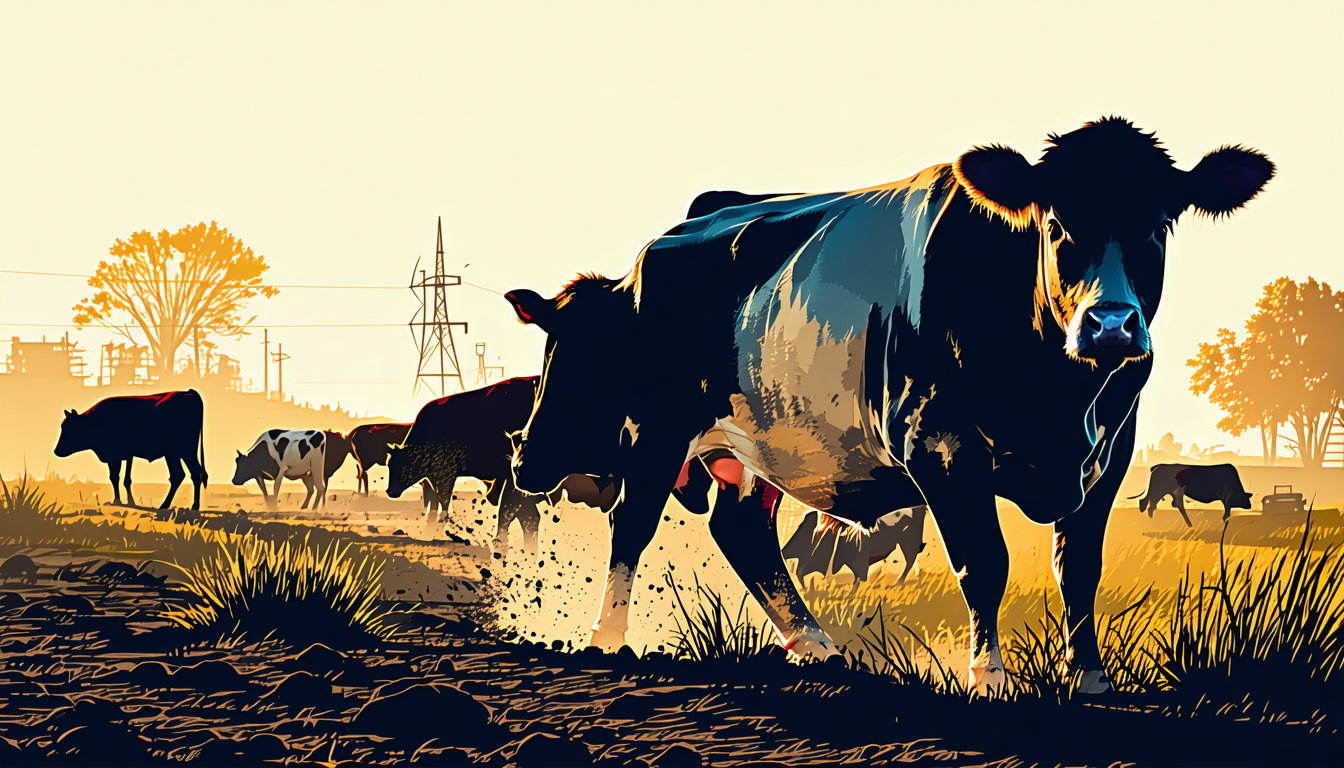
American Ranchers Face Rising Costs Amidst Political Loyalty to Trump
🐦 The Peck
Key Facts
-
●
Ranchers in the U.S. are experiencing significant increases in feed and fuel costs.
CORROBORATED -
●
Many ranchers express a strong loyalty to former President Donald Trump despite economic challenges.
CORROBORATED -
●
The price of beef has fluctuated significantly in the past year, impacting ranchers' profitability.
CORROBORATED -
●
Ranchers are increasingly concerned about the long-term sustainability of their operations due to rising costs.
UNVERIFIED
🔍 The Big Picture
**The Big Picture: American Ranchers Face Rising Costs Amidst Political Loyalty to Trump**
American ranchers are currently navigating a challenging economic landscape characterized by soaring costs for feed and fuel, which have sharply impacted their profitability. As verified reports indicate, these rising expenses are prompting many ranchers to express concerns about the long-term sustainability of their operations. The fluctuations in beef prices over the past year have compounded these challenges, leaving ranchers in a precarious position as they attempt to balance their financial viability with a deep-seated loyalty to former President Donald Trump. This loyalty, despite economic hardships, highlights the complex interplay between political identity and economic realities in rural America.
The loyalty many ranchers feel towards Trump can be understood in the context of his administration's agricultural policies, which included efforts to support farmers and ranchers through various subsidies and trade agreements. However, the current economic pressures suggest a potential disconnect between political allegiance and the immediate financial needs of ranchers. As costs continue to rise, there is a growing concern that this loyalty may not translate into practical support for their economic interests. This situation raises questions about the future of ranching as a viable occupation and the political implications of a constituency that may feel increasingly neglected by the very leaders they support.
Moreover, the broader implications of this situation extend beyond the ranching community. The rising costs of production could lead to increased beef prices for consumers, which may alter purchasing behaviors and impact the overall food supply chain. If ranchers are unable to sustain their operations, this could result in reduced beef production, further exacerbating price volatility in the market. Additionally, the economic struggles faced by ranchers could influence political dynamics, potentially leading to shifts in voter sentiment as economic realities take precedence over political affiliations.
Competing interpretations of this scenario highlight the tension between political loyalty and economic necessity. Some may argue that ranchers’ unwavering support for Trump reflects a deeper ideological commitment that transcends immediate financial concerns, while others might contend that economic pressures could eventually lead to a reevaluation of political loyalties. Uncertainty remains regarding the long-term effects of these dynamics, as external factors such as global market trends and domestic policy changes will play a significant role in shaping the future of ranching in America.
In summary, the current predicament faced by American ranchers illustrates a critical intersection of economics and politics. As they confront rising costs and fluctuating beef prices, the implications for their operations, the broader agricultural economy, and political landscapes are profound. The ongoing situation warrants close attention, as it may serve as a bellwether for broader trends in rural America and the evolving relationship between political loyalties and economic realities.
👀 What to Watch
- **October 31, 2023**: The U.S. Department of Agriculture (USDA) will release its monthly Livestock, Dairy, and Poultry Outlook report, which may provide insights into current beef prices and feed costs affecting ranchers.
- **November 7, 2023**: The National Cattlemen's Beef Association (NCBA) will hold its annual convention in Nashville, Tennessee, where ranchers will discuss economic challenges and market conditions, potentially addressing their loyalty to political figures.
- **November 15, 2023**: The USDA is scheduled to publish its annual Cattle Inventory report, which will detail changes in herd sizes and could impact future beef supply and pricing.
- **December 1, 2023**: The U.S. Senate Agriculture Committee will hold hearings on agricultural economic issues, where ranchers’ concerns about rising costs may be addressed, along with potential legislative responses.
- **January 2024**: The quarterly earnings reports from major beef processing companies (e.g., Tyson Foods, JBS USA) will be released, providing insights into profitability trends that may affect ranchers.
- **February 2024**: The next Farm Bill is expected to be finalized, with discussions on provisions that could impact ranchers, including subsidies and support for rising costs.
- **March 2024**: The USDA will conduct its annual Agricultural Outlook Forum, where experts will present forecasts for the agricultural sector, including projections for beef prices and operating costs for ranchers.
Comments (0)
No comments yet. Be the first to share your thoughts!
This Peckture was researched and generated by Peckture.com based on publicly available information. All claims are marked with their verification status.
Last updated: October 12, 2026 10:01 PM