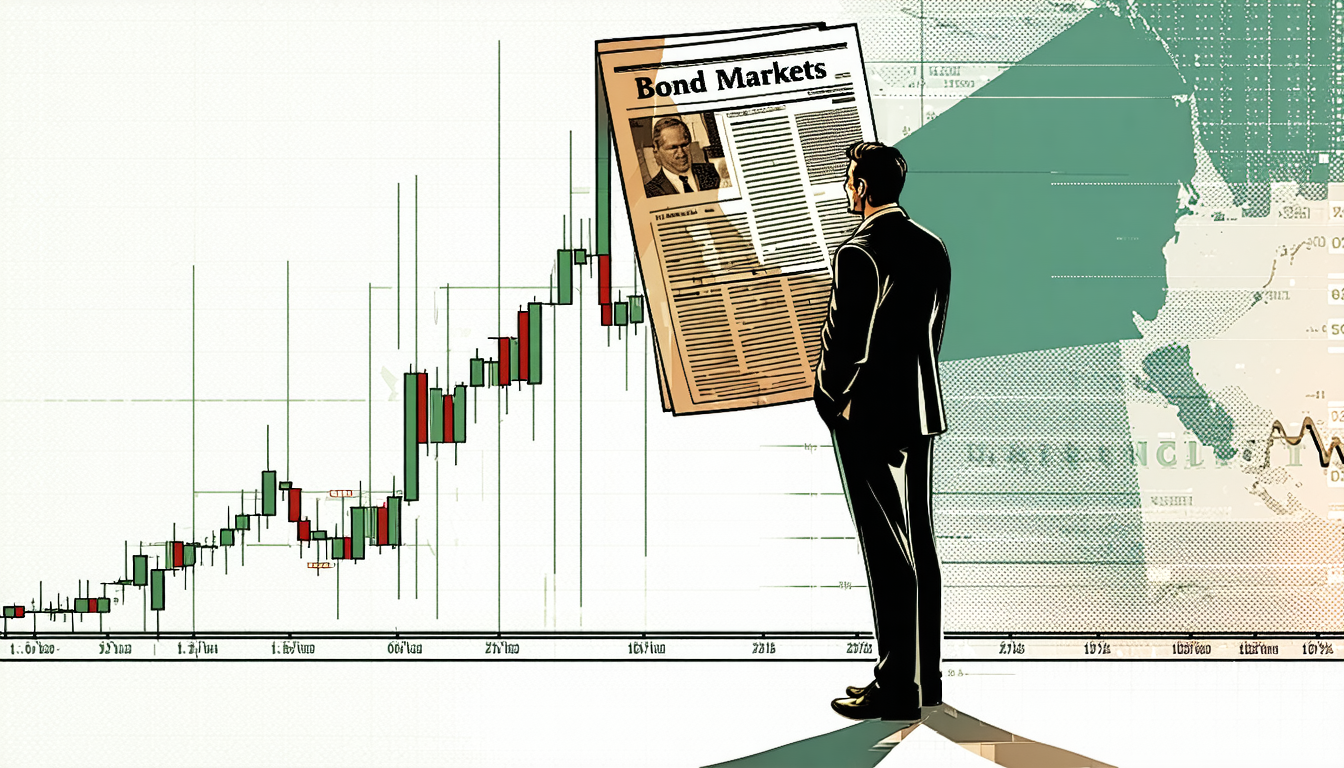
Bond Market Signals Potential Economic Slowdown Amid Rising Yields
🐦 The Peck
Key Facts
-
●
The bond market is showing signs of concern about the economy as yields rise.
CORROBORATED -
●
In recent weeks, the yield on the 10-year Treasury note has increased significantly.
CORROBORATED -
●
Analysts are concerned that rising bond yields may lead to higher borrowing costs and impact economic growth.
CORROBORATED -
●
The Federal Reserve's interest rate policy is influencing bond market dynamics.
CORROBORATED -
●
There is a historical correlation between rising bond yields and economic downturns.
UNVERIFIED
🔍 The Big Picture
The recent uptick in bond yields, particularly the notable rise in the yield on the 10-year Treasury note, has sparked widespread concern among analysts regarding the potential for an economic slowdown. Higher yields often indicate that investors are demanding greater compensation for holding government debt, reflecting a negative outlook on economic stability. As yields increase, the cost of borrowing tends to rise, which can dampen consumer spending and business investment—key drivers of economic growth. This situation warrants close attention, as it may foreshadow broader economic challenges.
The Federal Reserve's interest rate policy plays a pivotal role in shaping bond market dynamics. As the Fed has signaled its intent to combat inflation through interest rate hikes, the resulting increase in short-term rates has cascaded into the longer end of the yield curve. This phenomenon can create a ripple effect throughout the economy, influencing everything from mortgages to corporate financing. Analysts are particularly concerned that sustained higher yields could lead to a slowdown in economic activity, as both consumers and businesses may be less inclined to take on new debt amid rising costs.
Historically, there is a correlation between rising bond yields and economic downturns, raising the question of whether the current market signals are indicative of an impending recession. However, it is essential to differentiate between correlation and causation. While rising yields can indeed precede economic contractions, they can also occur in environments where growth remains robust, particularly if inflationary pressures persist. Competing interpretations of this data suggest that some market participants view rising yields as a normalization of rates after years of historically low levels, rather than a harbinger of economic distress.
The implications of these market trends are significant for businesses and policymakers alike. Companies may need to reassess their capital investment strategies in light of potentially higher borrowing costs, while policymakers may face pressure to adjust their monetary policies to mitigate the risks of an economic slowdown. As businesses navigate this uncertain environment, the interaction between bond yields and economic performance will be a critical area to monitor. It is important to remain cautious, as the evolving nature of economic indicators could lead to various scenarios, ranging from a mild slowdown to a more severe economic contraction, underscoring the importance of adaptable strategies in both corporate and government financial planning.
👀 What to Watch
- **Federal Reserve Meeting**: The next Federal Open Market Committee (FOMC) meeting is scheduled for **November 1, 2023**, where the Fed will discuss interest rates and monetary policy, potentially impacting bond yields.
- **10-Year Treasury Yield Reports**: The U.S. Department of the Treasury regularly publishes updates on bond yields. Watch for the next yield report on **October 30, 2023**, which could reflect ongoing trends in the bond market.
- **Economic Data Releases**: Key economic indicators, including the GDP growth rate for Q3 2023, will be released on **October 26, 2023**, providing insight into the economic conditions influencing bond market sentiment.
- **Corporate Earnings Reports**: Major corporations will begin reporting Q3 earnings in late October, with significant companies such as Amazon and Apple scheduled for **October 31, 2023**. These results may influence investor confidence and bond market reactions.
- **Consumer Confidence Index**: The Conference Board will release its Consumer Confidence Index on **October 31, 2023**, which could provide insights into consumer sentiment and spending, affecting economic growth forecasts.
- **Jobless Claims Data**: The U.S. Department of Labor will release weekly jobless claims data on **November 2, 2023**, which can indicate labor market strength or weakness, influencing economic outlooks and bond yields.
- **Inflation Reports**: The Consumer Price Index (CPI) for October will be released on **November 10, 2023**, providing critical data on inflation trends that could impact Federal Reserve policy and bond market dynamics.
Comments (0)
No comments yet. Be the first to share your thoughts!
This Peckture was researched and generated by Peckture.com based on publicly available information. All claims are marked with their verification status.
Last updated: September 27, 2026 10:00 PM