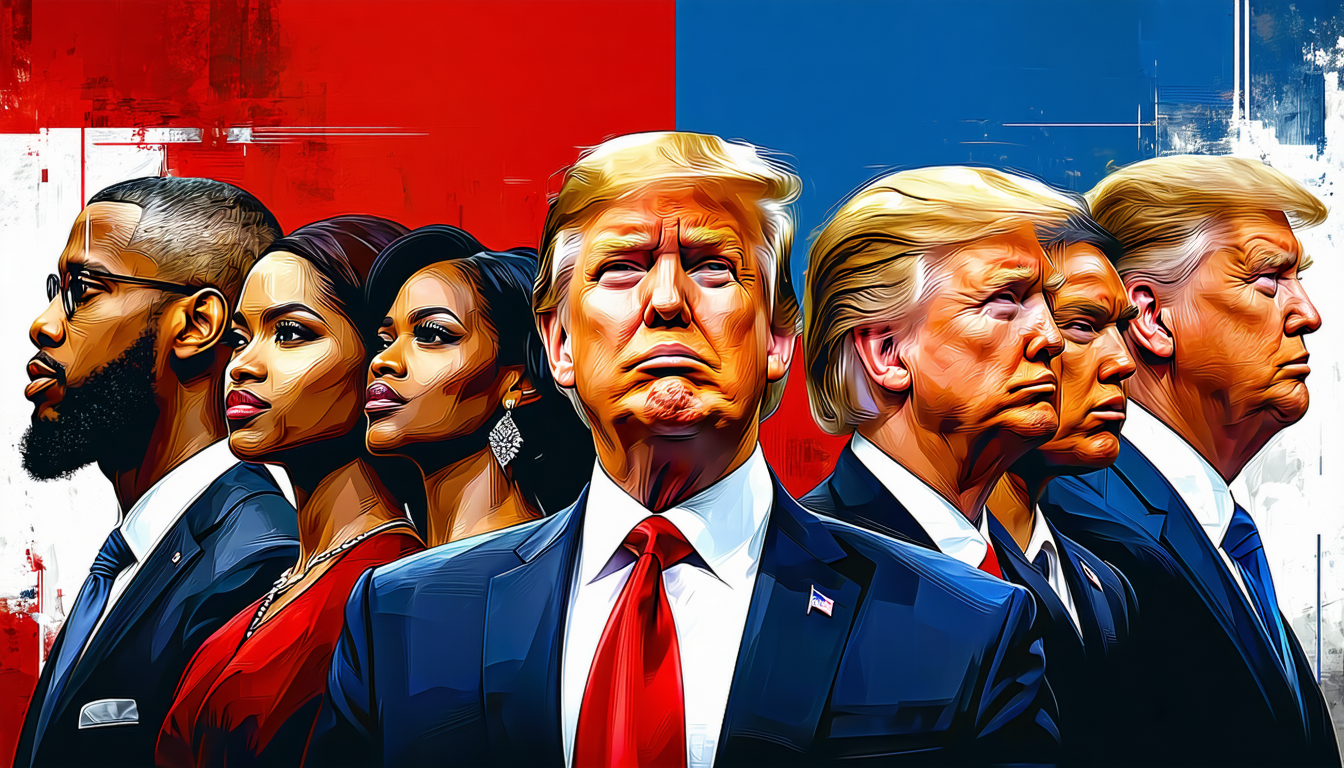
Democratic Candidates with Religious Backgrounds Face GOP Criticism
🐦 The Peck
Key Facts
-
●
Democrats are increasingly nominating pastors and religious leaders for political office.
CORROBORATED -
●
Republicans are attacking Democratic candidates for their religious comments and affiliations.
CORROBORATED -
●
The trend of religious candidates is seen as a response to the growing polarization in American politics.
UNVERIFIED -
●
Some Democratic candidates have openly discussed their faith in campaign speeches.
CORROBORATED
🔍 The Big Picture
The recent trend of Democratic candidates with religious backgrounds facing criticism from Republican counterparts underscores a significant shift in the political landscape of the United States. As Democrats increasingly nominate pastors and religious leaders, this move reflects a strategic effort to connect with a diverse electorate, particularly in areas where faith plays a central role in community life. The decision to elevate candidates with strong religious affiliations may also be interpreted as a response to the growing polarization in American politics, where issues of faith and morality are often intertwined with party identity.
This phenomenon raises important questions about the intersection of religion and politics in the current climate. Republicans have seized upon the religious statements and affiliations of Democratic candidates to cast them as out of touch or hypocritical, particularly in regions where evangelical Christianity holds significant sway. Such critiques may resonate with certain voter demographics, potentially influencing election outcomes. It is essential to recognize that these attacks can also backfire, as they may alienate moderate and progressive voters who value the expression of faith in public life, thereby complicating the Republican narrative.
Moreover, the increasing visibility of religious figures in Democratic campaigns signals a broader trend of candidates seeking to humanize their platforms through personal narratives that include faith. This strategy may be effective in bridging divides among voters who prioritize moral leadership in governance. However, the implications are multifaceted; while some may view this as a revitalization of a values-driven political discourse, others could interpret it as a potential dilution of secular governance principles.
Uncertainty remains regarding the long-term impact of this trend on electoral dynamics and party strategies. While the immediate implications may appear to favor Democrats in mobilizing faith-based voters, the backlash from Republicans could reinforce partisan divisions. Additionally, the reception of these candidates will vary significantly across different regions, influenced by local religious landscapes and cultural attitudes towards faith in politics. As such, the growing presence of religious candidates within the Democratic Party may reflect both an adaptive strategy in response to contemporary political challenges and a complex interplay of voter expectations and party identity moving forward.
👀 What to Watch
- **October 25, 2023**: Several Democratic candidates will participate in a televised town hall focused on faith and politics, where they will address their religious beliefs and how these influence their political platforms.
- **November 1, 2023**: The Republican National Committee (RNC) plans to host a press conference to outline their strategy for countering the religious narratives presented by Democratic candidates in the upcoming elections.
- **November 8, 2023**: The Pew Research Center will release a report on the role of religion in American politics, which may provide insights into public perceptions of religious candidates from both parties.
- **November 15, 2023**: A debate among Democratic candidates is scheduled, where candidates are expected to discuss their faith and how it shapes their political views, likely inviting further GOP criticism.
- **December 5, 2023**: The next quarterly fundraising reports for key Democratic candidates with religious backgrounds will be released, offering insights into how their faith-based appeals are resonating with voters.
- **January 2024**: The Iowa caucuses will take place, marking the first major electoral event where candidates' religious backgrounds may play a significant role in voter decision-making.
- **February 2024**: The Super Tuesday primaries will occur, providing a critical moment to assess the impact of religious affiliations on candidates' performances in multiple states.
Comments (0)
No comments yet. Be the first to share your thoughts!
This Peckture was researched and generated by Peckture.com based on publicly available information. All claims are marked with their verification status.
Last updated: September 29, 2026 5:01 PM