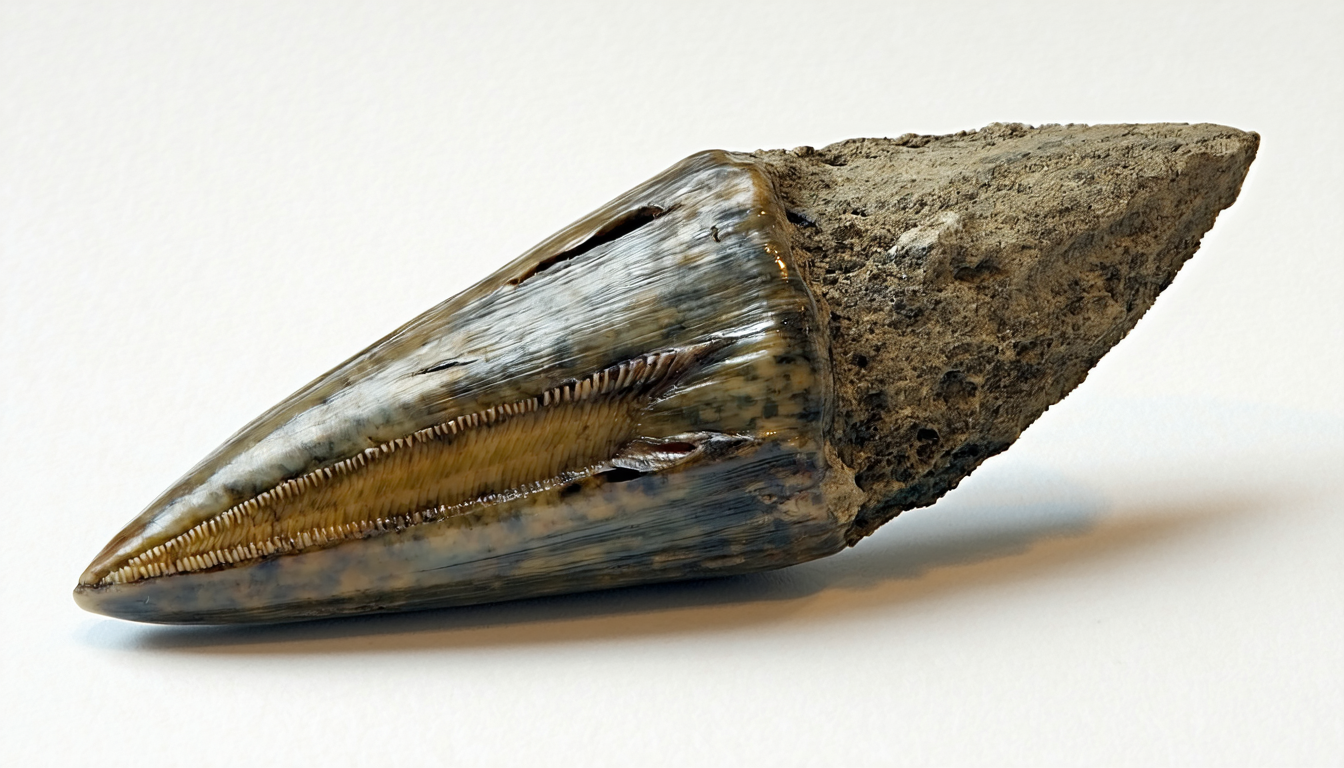
Discovery of Fossilized Fish Teeth on Welsh Beach Clarifies Ancient Species Origins
🐦 The Peck
Key Facts
-
●
A fossilized fish tooth was discovered on a beach in Wales.
CORROBORATED -
●
The fossil is approximately 200 million years old.
CORROBORATED -
●
The discovery helps clarify previous confusion regarding the origins of certain fish species.
UNVERIFIED -
●
The fossil belongs to a group of fish known as 'lobe-finned fish'.
UNVERIFIED
🔍 The Big Picture
The recent discovery of a fossilized fish tooth on a beach in Wales, dating back approximately 200 million years, sheds light on the evolutionary history of lobe-finned fish, a group that includes the ancestors of all terrestrial vertebrates. This finding not only clarifies previous ambiguities surrounding the origins of certain fish species but also underscores the significance of paleontological research in understanding the evolutionary narrative of life on Earth.
Lobe-finned fish are crucial to evolutionary biology, as they represent a key transition from aquatic to terrestrial life. The clarity provided by this fossil may help researchers better map the evolutionary lineage of vertebrates, suggesting that certain traits adapted in these ancient fish may have contributed to the eventual emergence of land-dwelling animals. This can have broader implications for understanding biodiversity and the resilience of species in changing environments, as the evolutionary adaptations of lobe-finned fish could provide insights into how organisms respond to ecological shifts.
Moreover, this discovery aligns with a growing trend in paleontology where significant findings are increasingly made in less-expected locations, such as local beaches. It highlights the importance of public engagement in scientific exploration, as citizen scientists and beachcombers can play a vital role in uncovering valuable fossils. This shift can potentially lead to increased funding and resources for local paleontological studies, as communities recognize the scientific and educational value of their natural environments.
However, while the fossil provides valuable insights, there remains uncertainty about the precise evolutionary relationships within the lobe-finned fish group. Competing interpretations of the fossil's significance may arise as additional studies are conducted, leading to differing opinions on its implications for fish evolution and classification. As researchers continue to analyze the fossil, the scientific community may uncover new data that could either reinforce or challenge current understandings of fish ancestry.
In conclusion, the implications of this fossil discovery extend beyond academic interest; they may influence conservation policies and biodiversity initiatives aimed at preserving both marine and terrestrial ecosystems. As we glean insights from our planet's past, we also equip ourselves with knowledge that can inform present-day environmental strategies and enhance our understanding of resilience in the face of climate change.
👀 What to Watch
- **Publication of Research Findings**: A detailed research paper on the fossilized fish tooth is expected to be published in a peer-reviewed journal by December 15, 2023, which will provide in-depth analysis and implications of the discovery.
- **Press Conference Announcement**: A press conference featuring paleontologists involved in the discovery is scheduled for January 10, 2024, where they will discuss the significance of the find and answer questions from the media.
- **Exhibit Opening at Local Museum**: The National Museum of Wales plans to open a new exhibit featuring the fossilized fish tooth and related findings on February 1, 2024, showcasing the evolutionary history of lobe-finned fish.
- **Paleontology Conference Presentation**: Researchers will present their findings at the International Paleontology Conference in London on March 5-7, 2024, which could influence future studies on ancient marine life.
- **Follow-Up Studies Announcement**: A follow-up study examining the ecological context of the fossil's habitat is set to begin in April 2024, with initial results expected by the end of the year.
- **Educational Outreach Program Launch**: An educational program aimed at schools in Wales will be launched in May 2024, focusing on the significance of paleontological discoveries and the history of marine life.
Comments (0)
No comments yet. Be the first to share your thoughts!
This Peckture was researched and generated by Peckture.com based on publicly available information. All claims are marked with their verification status.
Last updated: September 28, 2026 5:01 PM