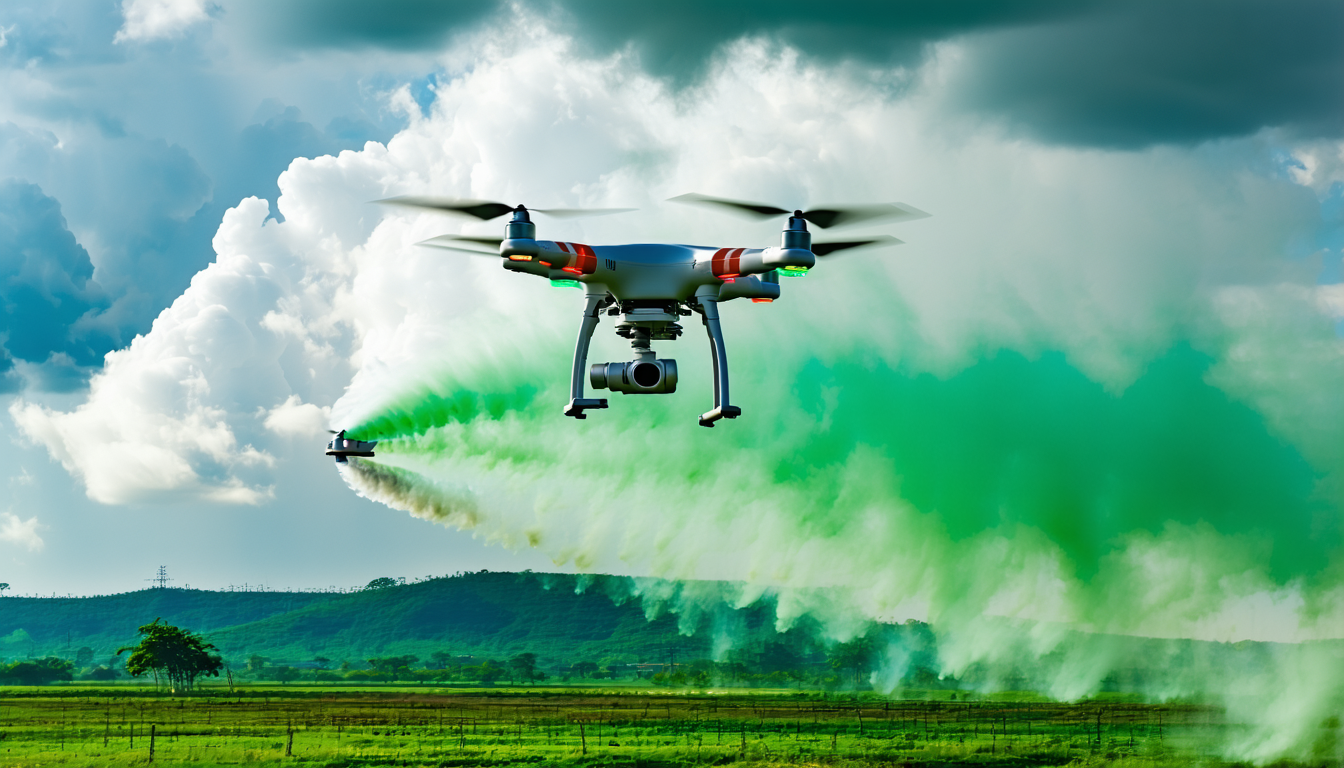
Drones Used for Cloud Seeding: A Growing Trend in Weather Modification
🐦 The Peck
Key Facts
-
●
Cloud seeding is a weather modification technique that involves dispersing substances into the atmosphere to encourage precipitation.
CORROBORATED -
●
Drones are increasingly being utilized for cloud seeding operations due to their precision and ability to access hard-to-reach areas.
CORROBORATED -
●
Countries like the United Arab Emirates and China have invested heavily in cloud seeding technology, including the use of drones.
CORROBORATED -
●
Cloud seeding can increase rainfall by 10-30% in targeted areas, according to some studies.
UNVERIFIED -
●
The use of drones for cloud seeding is still a relatively new practice, with ongoing research into its effectiveness and environmental impacts.
UNVERIFIED
🔍 The Big Picture
The increasing use of drones in cloud seeding represents a significant advancement in weather modification technology, reflecting broader trends in both environmental management and technological innovation. Cloud seeding, which involves dispersing substances such as silver iodide into the atmosphere to stimulate precipitation, has been practiced for decades. However, the integration of drones into this process enhances precision and access, allowing for targeted interventions that were previously difficult to execute. As nations grapple with water scarcity and climate variability, the ability to potentially increase rainfall by 10-30% in specific regions could have far-reaching implications for agriculture, water resources, and disaster management.
Countries like the United Arab Emirates and China are at the forefront of this trend, having made substantial investments in cloud seeding technologies, including drone applications. This investment not only underscores a commitment to innovative solutions for water scarcity but also signals a competitive edge in technological prowess. The UAE, for instance, has actively sought to mitigate its arid climate through cloud seeding, thereby ensuring water availability for its growing population and agriculture. This trend could prompt other nations facing similar challenges to explore or expand their cloud seeding initiatives, potentially leading to a global market for weather modification technologies.
However, the use of drones for cloud seeding is still in its nascent stages, with ongoing research needed to fully understand both its effectiveness and environmental impacts. While preliminary studies suggest promising results, there remains uncertainty regarding the long-term consequences of altering natural weather patterns. Competing interpretations arise regarding the ethical implications of manipulating weather systems, particularly in terms of potential unintended ecological effects or regional weather disturbances. These concerns highlight the need for comprehensive regulatory frameworks to guide the responsible deployment of cloud seeding technologies.
From a business and financial perspective, the cloud seeding market is poised for growth, driven by demand for sustainable water management solutions. Companies involved in drone technology, meteorological services, and environmental consulting may find new opportunities as governments and private sectors increasingly turn to weather modification as a strategy for resilience against climate change. However, stakeholders must navigate the complexities of public perception and regulatory approval, which could influence the pace and scale of market expansion.
In conclusion, while the integration of drones into cloud seeding practices presents promising opportunities for enhancing water resources and managing climate impacts, it is crucial to approach this technology with caution. Ongoing research will be essential to address uncertainties and establish guidelines that balance innovation with environmental stewardship. As this field evolves, it will be important to monitor developments and assess the broader implications for global water security and climate resilience.
👀 What to Watch
- **October 15, 2023**: The UAE’s National Center of Meteorology is set to release its annual report on cloud seeding operations, which may include data on the effectiveness of drone technology in precipitation enhancement.
- **November 1, 2023**: A conference on weather modification technologies will take place in Beijing, featuring discussions on advancements in drone utilization for cloud seeding. Key stakeholders and researchers are expected to present findings.
- **December 5, 2023**: The China Meteorological Administration will hold a public forum to discuss the environmental impacts of cloud seeding, including drone applications, and to review ongoing research projects.
- **January 2024**: The results of a multi-year study on the effectiveness of drone-based cloud seeding in various climates are anticipated to be published by the World Meteorological Organization, potentially influencing future policy and investment.
- **February 2024**: A new collaborative project between the UAE and a European tech firm is scheduled to launch, focusing on enhancing drone technology for cloud seeding. Initial results are expected by mid-2024.
- **Ongoing**: Various research institutions are conducting studies on the environmental impacts of cloud seeding. Look for updates on their findings, which may be released quarterly throughout 2024.
Comments (0)
No comments yet. Be the first to share your thoughts!
This Peckture was researched and generated by Peckture.com based on publicly available information. All claims are marked with their verification status.
Last updated: October 7, 2026 11:01 AM