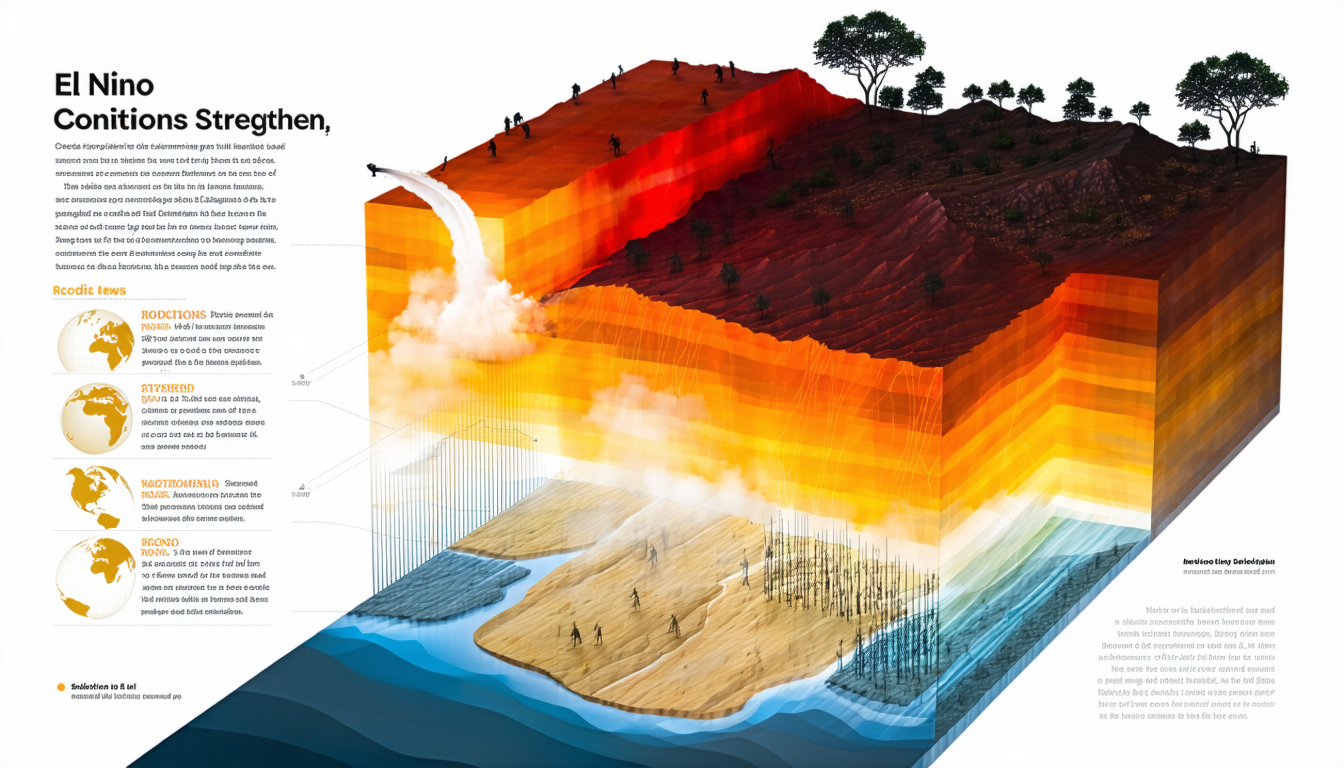
El Niño Conditions Strengthen, Potentially Setting Record Levels
🐦 The Peck
Key Facts
-
●
The current El Niño is projected to be the strongest on record.
CORROBORATED -
●
The peak of the El Niño is expected to occur in late 2023.
CORROBORATED -
●
El Niño events can lead to significant global weather changes, including increased rainfall in some regions and droughts in others.
CORROBORATED -
●
The current El Niño has been linked to warmer sea surface temperatures in the central and eastern Pacific Ocean.
CORROBORATED -
●
The last strong El Niño occurred in 2015-2016, which caused widespread weather disruptions globally.
CORROBORATED
🔍 The Big Picture
**The Big Picture: El Niño Conditions Strengthen, Potentially Setting Record Levels**
The current El Niño phenomenon is intensifying, with projections indicating it could surpass historical records. This weather pattern, characterized by warmer sea surface temperatures in the central and eastern Pacific Ocean, has significant implications for global weather systems. As the peak is anticipated in late 2023, various regions may experience extreme weather conditions, including heightened rainfall in some areas and severe droughts in others. The last strong El Niño, which occurred between 2015 and 2016, resulted in widespread disruptions, affecting agricultural productivity, water supply, and disaster management worldwide.
Understanding the potential impacts of this El Niño is crucial for several sectors, particularly agriculture, water management, and disaster preparedness. For instance, regions traditionally reliant on predictable rainfall patterns may face challenges in crop yields due to unexpected droughts or floods. This unpredictability can lead to food supply shortages and increased prices, compounding existing economic pressures, particularly in developing nations. Additionally, countries like Indonesia and Australia may experience heightened risks of bushfires and coral bleaching, further stressing their ecosystems and economies.
From a broader perspective, the strengthening of El Niño conditions is indicative of ongoing climate variability, which is becoming increasingly critical in the context of climate change. Scientists have observed that climate change may be influencing the frequency and intensity of such weather events. As a result, stakeholders, including policymakers, businesses, and communities, must adapt their strategies to mitigate potential adverse effects. This may involve investment in resilient infrastructure, climate-smart agricultural practices, and improved water management systems to cope with the anticipated fluctuations in weather patterns.
However, it is important to note that while the current El Niño is projected to be strong, the exact extent of its impact remains uncertain. Competing interpretations exist regarding the potential severity of weather disruptions. Some experts suggest that advancements in climate modeling may allow for better predictions, while others caution against over-reliance on models that may not account for all variables. Therefore, it is essential for businesses and policymakers to remain vigilant and flexible in their planning to navigate the complexities posed by this evolving climate phenomenon.
In conclusion, the strengthening El Niño poses substantial material implications for global agriculture, water resources, and disaster risk management. As stakeholders prepare for potential disruptions, the need for adaptive strategies becomes paramount. By acknowledging the uncertainties and preparing for a range of scenarios, businesses and governments can better position themselves to respond to the challenges presented by this significant climatic event.
👀 What to Watch
- **NOAA El Niño Update**: The National Oceanic and Atmospheric Administration (NOAA) is scheduled to release its next El Niño status and forecast update on **November 9, 2023**, detailing the expected intensity and potential impacts of the current conditions.
- **Global Weather Impact Reports**: Various meteorological agencies, including the World Meteorological Organization (WMO), are expected to publish assessments of El Niño's impact on global weather patterns in early **December 2023**, following the anticipated peak of the event.
- **Climate Conferences**: The United Nations Climate Change Conference (COP28) will take place from **November 30 to December 12, 2023**, where discussions may include the implications of current El Niño conditions on climate policy and global weather challenges.
- **Research Publications**: Academic journals and climate research institutions are likely to release studies and papers analyzing the effects of the 2023-2024 El Niño on weather patterns and climate trends, with several reports expected in **early 2024**.
- **Drought and Flood Monitoring Reports**: Regional weather services are expected to issue updates on drought and flood conditions influenced by El Niño, with significant reports anticipated in **January 2024** as the event peaks.
- **Agricultural Impact Assessments**: Agricultural agencies and organizations will likely publish assessments of how the El Niño conditions are affecting crop yields and farming practices, with reports expected by **February 2024**.
- **Public Health Alerts**: Health organizations may begin issuing alerts regarding potential health impacts related to weather changes caused by El Niño, with initial updates expected in **early 2024** as conditions evolve.
Comments (0)
No comments yet. Be the first to share your thoughts!
This Peckture was researched and generated by Peckture.com based on publicly available information. All claims are marked with their verification status.
Last updated: September 22, 2026 2:01 PM