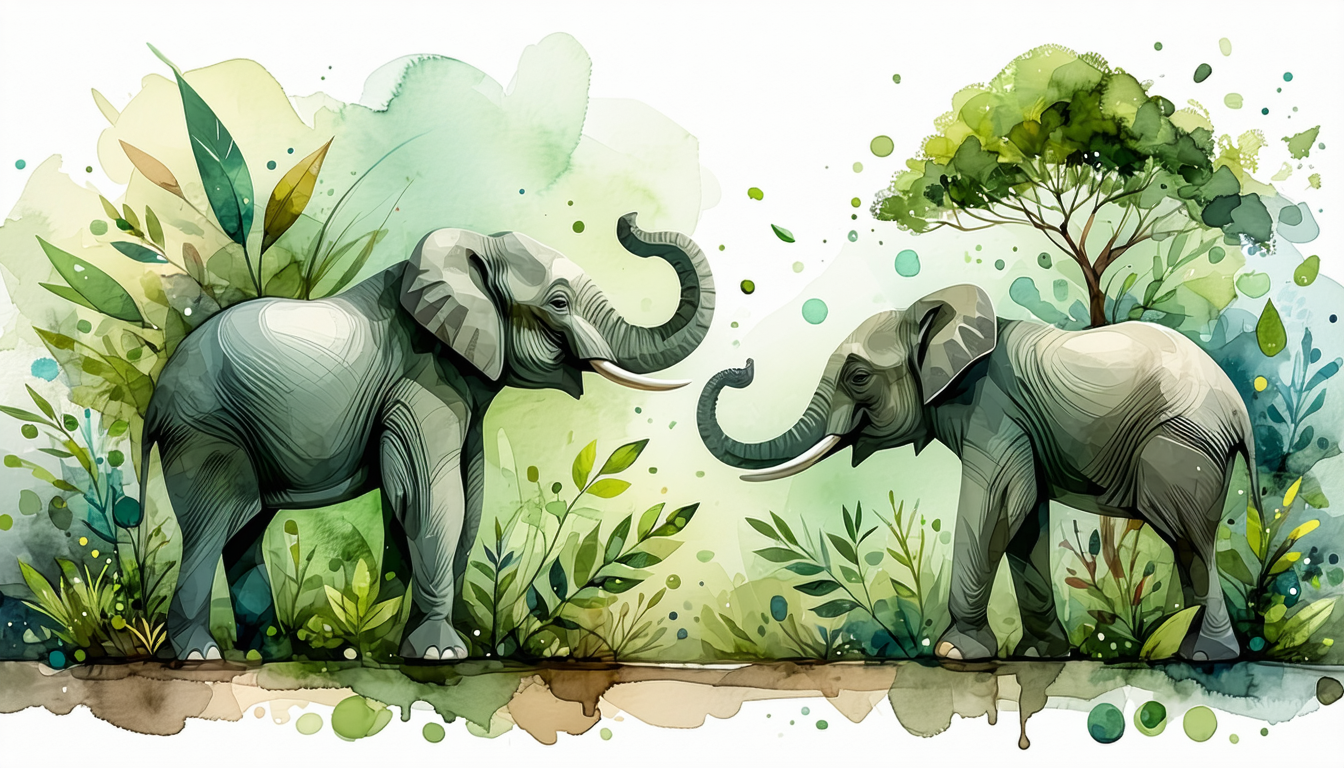
Elephants Self-Medicate with Medicinal Plants, Study Reveals
🐦 The Peck
Key Facts
-
●
Elephants have been observed using specific plants for self-medication.
CORROBORATED -
●
The study highlights that elephants consume certain leaves and fruits known for their medicinal properties.
CORROBORATED -
●
Self-medication behavior in elephants has been documented in multiple regions, including Africa and Asia.
UNVERIFIED -
●
The findings suggest that elephants may possess knowledge of the healing properties of certain plants.
UNVERIFIED
🔍 The Big Picture
The recent study revealing that elephants engage in self-medication by utilizing specific medicinal plants adds a significant layer to our understanding of animal behavior and intelligence. This research underscores a remarkable aspect of elephants' cognitive abilities, suggesting that they possess not only the capacity for complex social interactions but also an understanding of their own health needs. Observations indicate that elephants selectively consume certain leaves and fruits known for their medicinal properties, which has been documented across various regions in Africa and Asia. This finding is pivotal as it challenges long-held perceptions of animal instinct, indicating a more nuanced understanding of ecological knowledge among non-human species.
The implications of this study extend beyond mere fascination with animal behavior. The ability of elephants to self-medicate could have broader ecological ramifications, particularly in the context of conservation efforts. As elephants play a crucial role in their ecosystems—such as seed dispersal and habitat modification—their health directly impacts biodiversity. Understanding their self-medication practices may inform strategies for habitat preservation and species protection, particularly in areas where elephants face threats from habitat loss and poaching. The acknowledgment of their medicinal plant use can also guide conservationists in identifying critical plant species that need protection due to their importance to elephant health.
Moreover, this research opens avenues for further exploration into the medicinal properties of plants used by elephants, which could have potential applications in human medicine. The intersection of traditional ecological knowledge and modern pharmacology is a growing field, and insights gained from the study of elephant self-medication could lead to the discovery of novel compounds for health applications. However, this scenario remains speculative until rigorous scientific validation of the plants' properties is conducted.
Competing interpretations of the findings could revolve around the extent of knowledge and intention attributed to elephants. While the study suggests a level of conscious self-medication, critics might argue that these behaviors could simply be instinctual responses to environmental stimuli. Additionally, there is uncertainty regarding the long-term implications of this behavior in the face of climate change and habitat degradation, which could alter the availability of these medicinal plants.
In summary, the discovery of self-medication in elephants not only enhances our understanding of their behavior but also raises significant questions about conservation practices and the potential for bioprospecting in the realm of medicinal plants. As researchers continue to delve into this subject, the integration of animal behavior studies with conservation strategies could provide a more holistic approach to preserving both elephants and the ecosystems they inhabit.
👀 What to Watch
- **Publication of Study Findings**: The full study detailing the self-medication behaviors of elephants is expected to be published in the journal *Nature* on November 15, 2023, providing in-depth insights and data supporting the claims.
- **International Conference on Wildlife Conservation**: Scheduled for December 5-7, 2023, in Nairobi, Kenya, this conference will feature discussions on animal behavior and conservation strategies, including presentations on the implications of the study's findings.
- **Follow-Up Research Initiatives**: Researchers involved in the study plan to launch a follow-up project in early 2024 to further investigate the specific plants used by elephants in various habitats, with a projected start date of January 10, 2024.
- **Wildlife Protection Policy Review**: A review of wildlife protection policies influenced by recent findings on animal self-medication is set for January 25, 2024, during a meeting of the Convention on International Trade in Endangered Species (CITES).
- **Documentary Release**: A documentary exploring animal self-medication, including elephants, is slated for release on February 20, 2024, which will feature interviews with the study's authors and footage of elephants in their natural habitats.
Comments (0)
No comments yet. Be the first to share your thoughts!
This Peckture was researched and generated by Peckture.com based on publicly available information. All claims are marked with their verification status.
Last updated: September 24, 2026 5:01 PM