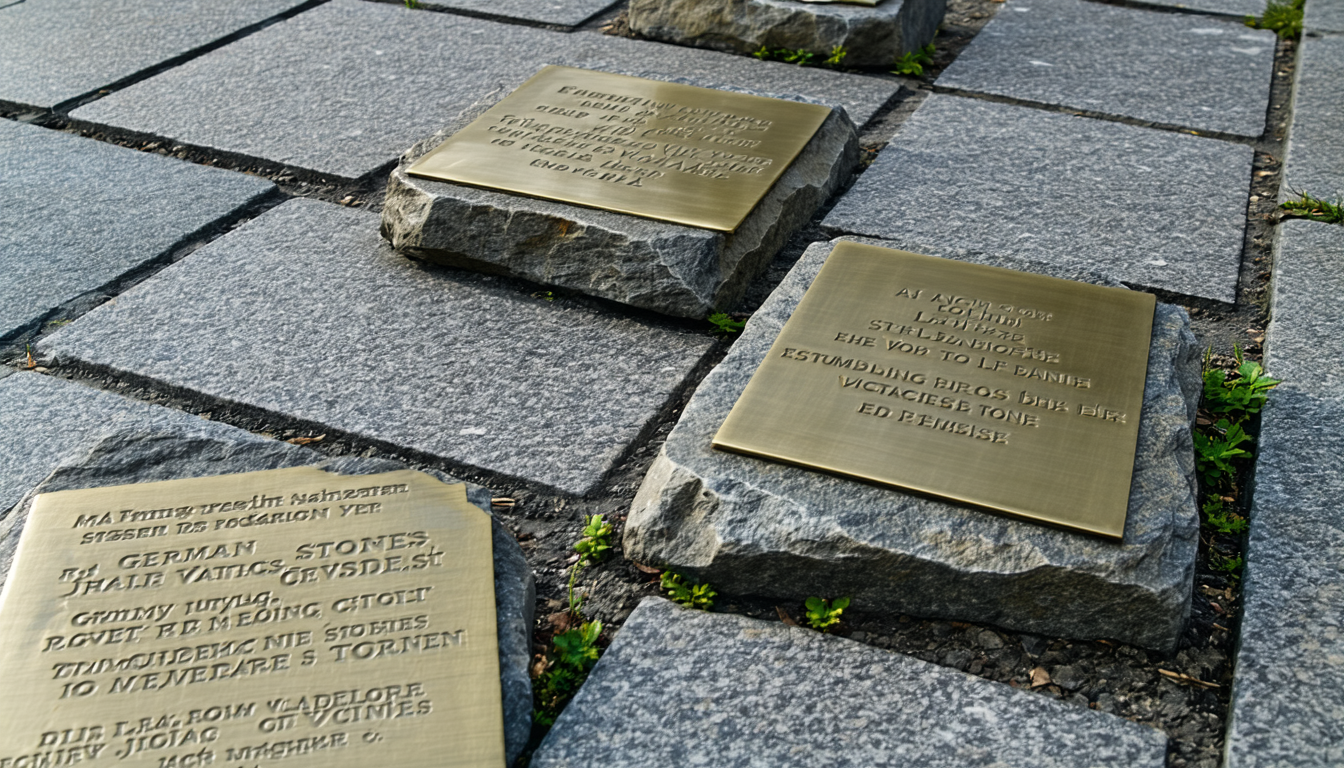
German Town of Cologne Bans 'Stumbling Stones' Memorials to Nazi Victims
🐦 The Peck
Key Facts
-
●
The city council of Cologne has voted to ban the installation of 'stumbling stones' memorials.
CORROBORATED -
●
The decision to ban the memorials was made due to concerns over public safety and accessibility.
CORROBORATED -
●
'Stumbling stones' are small brass plaques embedded in sidewalks to commemorate victims of the Holocaust.
CORROBORATED -
●
The ban has sparked a debate about how to properly memorialize Holocaust victims.
UNVERIFIED
🔍 The Big Picture
The recent decision by the city council of Cologne to ban 'stumbling stones' memorials—small brass plaques embedded in sidewalks to commemorate Holocaust victims—highlights a complex intersection of memory, public space, and community safety. The council's vote was driven by concerns regarding public safety and accessibility, particularly for individuals with disabilities. This decision raises critical questions about the most appropriate and effective ways to memorialize the victims of Nazi atrocities while balancing the needs of the living.
The ban on stumbling stones in Cologne is significant not only for the local community but also for the broader discourse surrounding Holocaust remembrance. Stumbling stones, first initiated by artist Gunter Demnig in the early 1990s, have become a prominent form of grassroots memorialization across Germany and in various other countries. They serve as a poignant reminder of the individual lives lost during the Holocaust and encourage public engagement with history. The council's decision may set a precedent for other municipalities grappling with similar concerns about the installation of such memorials, potentially impacting the future of public memorialization practices.
This situation underscores a tension between historical commemoration and contemporary urban planning. Advocates for stumbling stones argue that these memorials foster historical awareness and community reflection, while opponents cite the need for inclusive public spaces that accommodate all citizens. The debate reflects broader societal challenges in addressing historical injustices; the decision may be interpreted as a retreat from public acknowledgment of the Holocaust in favor of practical considerations, which could diminish communal memory and education efforts.
While the city council's focus on safety and accessibility is valid, it raises uncertainty about how future memorialization efforts will be shaped by similar concerns. As urban areas continue to evolve, the challenge will be to find innovative ways to honor historical events without compromising public accessibility. Moving forward, it will be essential for policymakers and community stakeholders to engage in dialogue that balances remembrance with practical urban considerations, ensuring that the legacies of the past are not lost in the pursuit of contemporary urban development.
Ultimately, the ban on stumbling stones in Cologne reflects a broader trend in how societies negotiate memory and accessibility in public spaces. The implications of this decision extend beyond the local context, potentially influencing how other cities approach similar memorial projects and the ongoing conversation about the responsibilities of remembrance in a modern, inclusive society.
👀 What to Watch
- **Public Consultation Period**: A public consultation period will commence on November 20, 2023, allowing residents to voice their opinions on the decision and suggest other forms of remembrance.
- **Legal Review**: The city’s legal team is expected to review the implications of the ban on existing memorials by December 1, 2023, which could lead to further developments in the legal framework surrounding public memorials.
- **Community Forum**: A community forum is set for December 10, 2023, where local historians and community leaders will discuss the impact of the ban and explore other methods of commemoration.
- **Media Coverage**: Anticipated media coverage on December 15, 2023, will likely focus on the public response to the ban and highlight ongoing debates in other German cities regarding similar memorials.
- **Potential Appeals**: Advocacy groups may announce plans to appeal the decision or propose new memorial initiatives by January 10, 2024, as they seek to challenge the council's ruling.
- **Annual Commemoration Event**: An annual event to commemorate Holocaust victims is scheduled for January 27, 2024, which may serve as a platform for discussions about the ban and alternative memorialization efforts.
Comments (0)
No comments yet. Be the first to share your thoughts!
This Peckture was researched and generated by Peckture.com based on publicly available information. All claims are marked with their verification status.
Last updated: September 26, 2026 10:00 PM