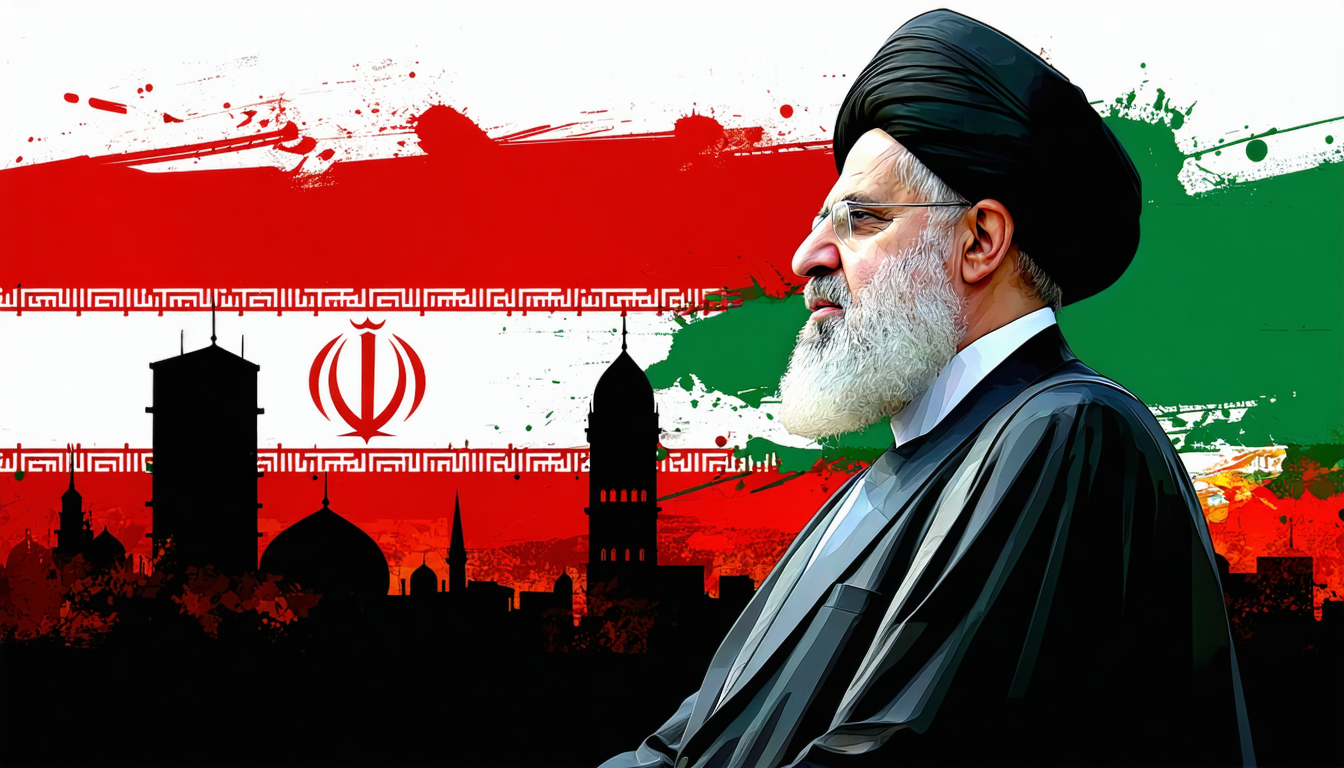
Iran's President Asserts Nation's Stance Against U.S. Pressure
🐦 The Peck
Key Facts
-
●
Iran's President Ebrahim Raisi stated that Iran will never 'bend the knee' to U.S. pressure.
CORROBORATED -
●
The statement was made in response to U.S. President Donald Trump's administration's sanctions and pressure on Iran.
CORROBORATED -
●
The phrase 'bend the knee' has been used historically in political discourse to signify submission.
UNVERIFIED
🔍 The Big Picture
**The Big Picture: Iran's Stance Against U.S. Pressure**
Iran's President Ebrahim Raisi's recent declaration that the nation will never "bend the knee" to U.S. pressure highlights a critical juncture in U.S.-Iran relations, particularly in the context of ongoing sanctions and diplomatic tensions that have intensified since the Trump administration. This statement serves not only as a reaffirmation of Iran's resilience against foreign influence but also as a strategic positioning to bolster national unity and defiance against perceived external threats. The use of the phrase "bend the knee," steeped in historical significance, echoes a broader narrative of resistance that resonates deeply within Iranian political discourse, suggesting an unwavering commitment to sovereignty.
This assertion is significant as it reflects Iran's broader strategy of positioning itself as a regional power that resists Western hegemony, particularly that of the United States. The implications of Raisi's statement extend beyond rhetorical bravado; they suggest a potential hardening of Iran's foreign policy, which could complicate diplomatic efforts aimed at reviving the Joint Comprehensive Plan of Action (JCPOA) nuclear agreement. The international community, particularly European nations seeking to mediate between Iran and the U.S., may find this stance a challenging barrier to negotiations, potentially prolonging economic instability in the region and affecting global oil markets.
Moreover, this declaration can be interpreted as a rallying point for domestic support within Iran, where the government faces economic challenges exacerbated by sanctions. By framing U.S. pressure as an affront to national dignity, the Raisi administration may seek to consolidate power and divert attention from internal issues, thus reinforcing a narrative of external scapegoating. However, this approach carries the risk of further alienating the Iranian populace, especially if economic conditions continue to deteriorate without tangible improvements in international relations.
Competing interpretations of this situation exist. Some analysts argue that Iran's obstinate stance may ultimately lead to further isolation, while others suggest that such defiance could inspire a form of resilience that might attract support from other nations facing similar pressures from the West. The uncertainty surrounding Iran's willingness to engage in negotiations or to maintain its current trajectory could have significant implications for global energy markets, as any escalation of tensions could disrupt oil supply chains, impacting prices and economic stability worldwide.
In summary, President Raisi's statements encapsulate a critical moment in Iran's geopolitical posture, reflecting both a commitment to national sovereignty and the complexities of navigating a fraught international landscape. The evolving dynamics of U.S.-Iran relations will likely continue to influence not only regional stability but also global economic conditions, making it imperative for stakeholders to closely monitor these developments.
👀 What to Watch
- **October 30, 2023**: Iran's Foreign Ministry is scheduled to hold a press conference to address recent statements by President Raisi and outline the government's foreign policy in light of U.S. sanctions.
- **November 5, 2023**: The U.S. Treasury Department is expected to announce new sanctions targeting Iranian entities, as part of ongoing efforts to curb Iran's nuclear program and regional influence.
- **November 15, 2023**: A meeting of the Joint Comprehensive Plan of Action (JCPOA) signatories is set to take place in Vienna, where discussions on Iran's nuclear compliance and U.S. pressure tactics will be on the agenda.
- **December 1, 2023**: The U.N. Security Council is scheduled to review the situation in Iran, including its compliance with international agreements, which may impact future diplomatic relations and sanctions.
- **January 10, 2024**: The Iranian Parliament is expected to debate and vote on new legislation aimed at countering U.S. sanctions and enhancing domestic industries, reflecting the government's commitment to economic resilience.
- **February 14, 2024**: A scheduled round of U.S.-Iran indirect negotiations in Oman to discuss potential diplomatic resolutions following the recent escalation in rhetoric and sanctions.
- **March 15, 2024**: The deadline for the U.S. to report to Congress on Iran's compliance with nuclear agreements, which could further influence U.S.-Iran relations and international diplomatic strategies.
Comments (0)
No comments yet. Be the first to share your thoughts!
This Peckture was researched and generated by Peckture.com based on publicly available information. All claims are marked with their verification status.
Last updated: September 23, 2026 5:00 PM