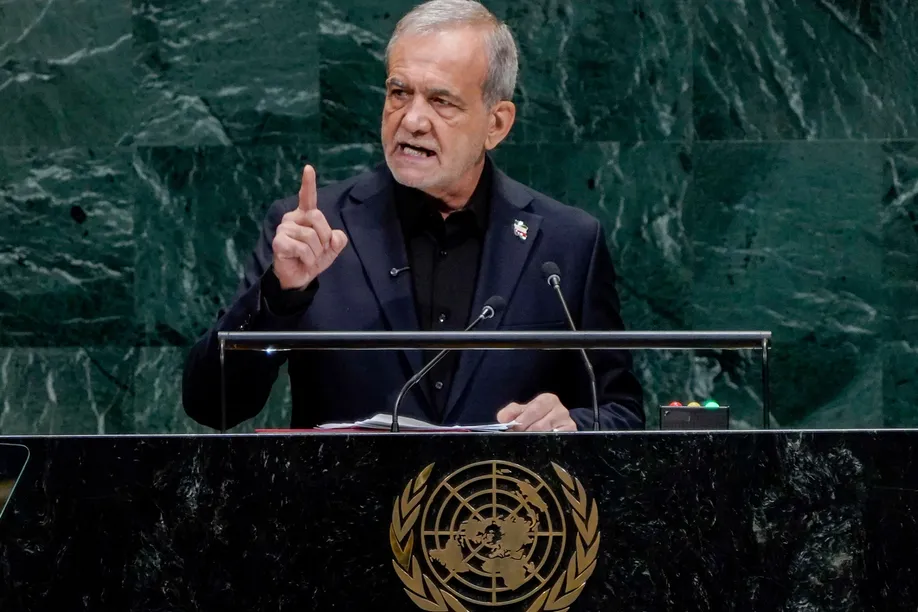
Iran's President Issues Strong Warning to US Amid Talks Speculation
🐦 The Peck
Key Facts
-
●
Iran's President Ebrahim Raisi has stated that Iran will not negotiate under pressure from the United States.
CORROBORATED -
●
Raisi emphasized Iran's commitment to its nuclear program during a recent speech.
CORROBORATED -
●
The US has expressed willingness to engage in talks with Iran regarding its nuclear program.
CORROBORATED -
●
Tensions between Iran and the US have escalated in recent months due to sanctions and military actions in the region.
CORROBORATED
🔍 The Big Picture
**The Big Picture: Analysis and Context for Iran's President's Warning to the US** Iranian President Ebrahim Raisi's recent declaration that Iran will not engage in negotiations under U.S. pressure underscores the complex and fraught nature of U.S.-Iran relations, particularly concerning Tehran's nuclear ambitions. Raisi's insistence on Iran's steadfast commitment to its nuclear program suggests a hardening of Iran's stance amidst ongoing tensions exacerbated by U.S. sanctions and military maneuvers in the region. This statement is significant as it reflects Iran's broader strategy to assert sovereignty and resist perceived external coercion, which has been a consistent theme in its foreign policy. The context of this warning is critical.
The U.S. has indicated a willingness to resume talks regarding Iran's nuclear program, particularly following the collapse of the Joint Comprehensive Plan of Action (JCPOA) in 2018 after the U.S. withdrew from the agreement. The current geopolitical landscape, marked by heightened military presence and sanctions, has created an environment where both nations feel pressured. For Iran, the nuclear program is not merely a matter of energy but is tied to national pride and security. Conversely, the U.S. views Iran’s nuclear developments as a direct threat to regional stability and its allies, particularly Israel and Saudi Arabia.
The implications of Raisi's warning extend beyond bilateral relations; they resonate within the broader context of Middle Eastern geopolitics. A continued stalemate could lead to further isolation of Iran and potential escalations in military confrontations, particularly in flashpoints like the Strait of Hormuz or Syria. Conversely, a willingness from the U.S. to engage in constructive dialogue could pave the way for de-escalation and negotiations, albeit under the challenge of overcoming deep-seated mistrust on both sides. Competing interpretations exist regarding the potential outcomes of this standoff.
Some analysts argue that Raisi’s comments indicate a rigid adherence to a confrontational stance that will inhibit diplomatic progress, potentially leading to an arms race in the region. Others suggest that Iran's firm position may be a negotiating tactic, aiming to strengthen its bargaining power in any future discussions. This uncertainty raises questions about the viability of future diplomatic efforts and the potential economic ramifications for both nations if tensions continue to escalate. In summary, Raisi's warning highlights the intricate dynamics of U.S.-Iran relations, which are characterized by a delicate balance of power, national interests, and regional security concerns.
The ability of both countries to navigate this complex landscape will have significant implications for international diplomacy, energy markets, and regional stability. As the situation evolves, stakeholders will need to remain vigilant and adaptable to the shifting geopolitical currents that define this critical relationship.
👀 What to Watch
- **October 30, 2023**: The United Nations Security Council will hold a session to discuss the ongoing tensions in the Middle East, including Iran's nuclear program and US sanctions. This may provide insights into international responses to the situation.
- **November 5, 2023**: The US State Department is expected to release a report on the status of Iran's nuclear program as part of its compliance assessment under the Joint Comprehensive Plan of Action (JCPOA). This report could influence future diplomatic engagements.
- **November 12, 2023**: Iran's Parliament is scheduled to convene to discuss the implications of US sanctions and the nuclear program. Outcomes from this session may shape Iran's domestic and international policy.
- **November 15, 2023**: A scheduled meeting between US and European diplomats regarding Iran's nuclear program is set to take place. The results could impact the potential for renewed negotiations.
- **Ongoing**: Monitoring of military activities in the Persian Gulf region, including US naval operations, as tensions have been heightened due to recent incidents. Any significant developments could escalate or de-escalate the situation.
- **December 1, 2023**: The deadline for the next round of sanctions review by the US Treasury Department, which could lead to further economic measures against Iran, impacting negotiations.
Comments (0)
No comments yet. Be the first to share your thoughts!
This Peckture was researched and generated by Peckture.com based on publicly available information. All claims are marked with their verification status.
Last updated: September 23, 2026 5:38 PM