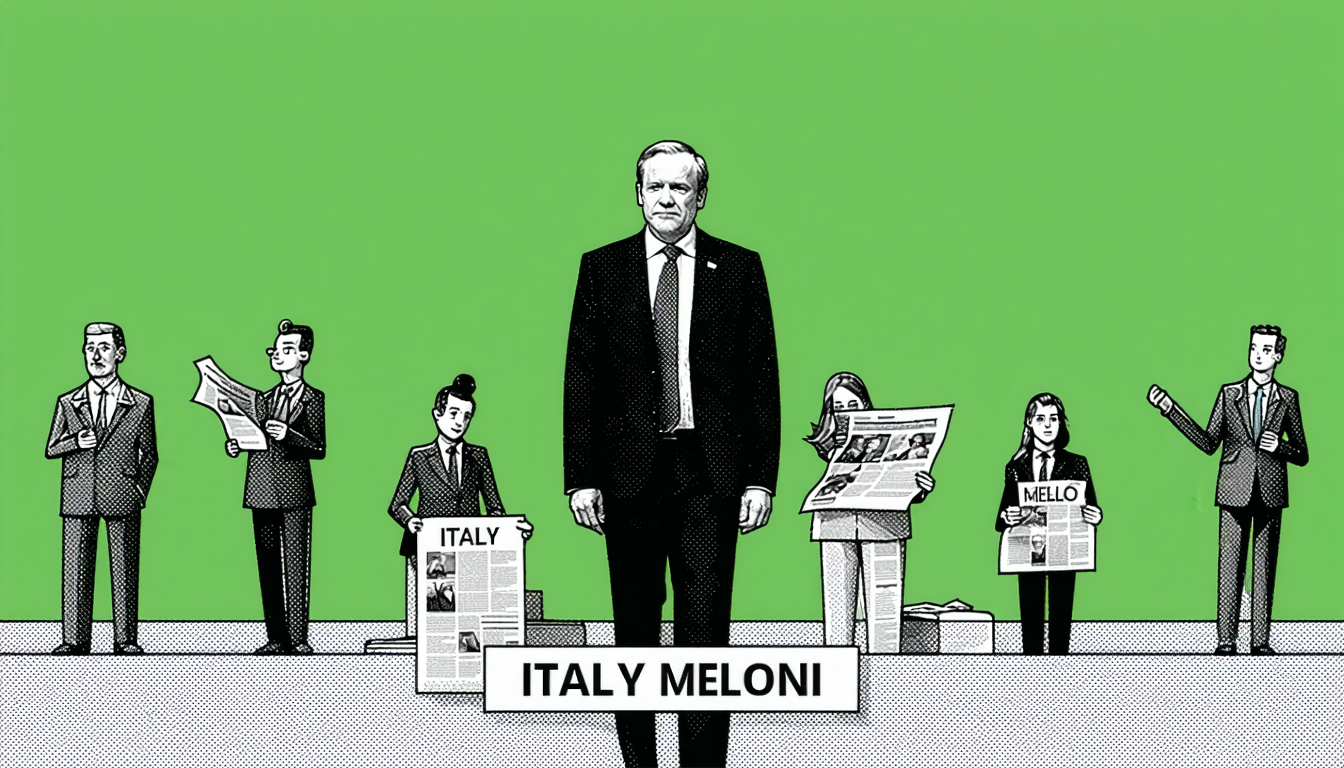
Italy's Meloni Government Approves Electoral Reforms Amid Opposition Criticism
🐦 The Peck
Key Facts
-
●
The Italian government, led by Prime Minister Giorgia Meloni, has approved a significant overhaul of the electoral system.
CORROBORATED -
●
Opposition parties have accused Meloni's government of orchestrating a 'scam' with these electoral reforms.
CORROBORATED -
●
The reforms are aimed at changing the electoral law to favor the ruling coalition.
UNVERIFIED -
●
The electoral overhaul includes changes to the proportional representation system.
UNVERIFIED
🔍 The Big Picture
**The Big Picture: Analysis of Italy's Electoral Reforms Under Meloni Government**
The recent approval of electoral reforms by Prime Minister Giorgia Meloni's government marks a pivotal moment in Italy's political landscape. This overhaul, primarily aimed at altering the proportional representation system, has raised significant concerns among opposition parties, who argue that the reforms are designed to entrench the ruling coalition's power. Such changes to the electoral law could have far-reaching implications for Italy's democratic processes and governance, potentially reshaping the political dynamics leading into the next election cycle.
The context of these reforms is critical. Italy has a long history of political fragmentation and unstable governments, often resulting in coalition administrations. By modifying the electoral system to favor the ruling coalition, Meloni’s government may be attempting to create a more stable governing environment. However, opponents characterize this move as a strategic 'scam,' suggesting that it undermines the principles of fair representation and could disenfranchise voters. This tension between stability and democratic integrity highlights a broader trend in European politics, where governments may prioritize consolidating power at the expense of established democratic norms.
The implications of these electoral reforms extend beyond the immediate political arena; they could also impact Italy's economic policy and international standing. A more stable government could facilitate decisive policy-making, particularly in addressing pressing issues such as economic recovery post-COVID-19, energy transition, and migration management. Conversely, if the reforms are perceived as undemocratic, they could provoke social unrest or lead to a loss of confidence among investors and international partners, affecting Italy’s economic resilience in a volatile global market.
Competing interpretations of these electoral reforms underscore the polarized nature of Italian politics. Supporters may argue that such changes are necessary for effective governance, while critics contend that they threaten democratic accountability. The uncertainty surrounding public response to these reforms could lead to significant electoral outcomes in the future, as voters react to perceived encroachments on their democratic rights.
In summary, the electoral reforms approved by Meloni's government represent a critical juncture for Italy's political future. While they may offer a pathway to greater governmental stability, the potential erosion of democratic principles raises questions about the long-term health of Italy's political system. As developments unfold, the interplay between governance, public perception, and economic stability will be crucial in determining the ultimate impact of these reforms.
👀 What to Watch
- **Parliamentary Debate on Reforms**: The Italian Parliament is scheduled to debate the proposed electoral reforms on **November 7, 2023**, which will allow for discussions and potential amendments before a vote.
- **Vote on Electoral Reforms**: A vote on the final version of the electoral reforms is expected to take place in the Italian Chamber of Deputies on **November 14, 2023**. This will be a critical moment to determine the fate of the proposed changes.
- **Opposition Response Rally**: Opposition parties are planning a rally to protest the electoral reforms on **November 10, 2023**, in Rome. This event will likely draw significant media attention and public scrutiny.
- **Legal Challenges**: Following the approval of the reforms, opposition groups have indicated plans to file legal challenges. Watch for announcements regarding these legal actions, anticipated by **mid-November 2023**.
- **Public Opinion Polls**: Various polling organizations are expected to release new surveys regarding public sentiment on the electoral reforms and the Meloni government around **November 20, 2023**. This data could reflect the impact of the reforms on voter perception.
- **European Union Response**: The European Commission has announced it will review the implications of the electoral reforms on EU standards, with an official statement expected by **December 1, 2023**. This could influence Italy's relationship with the EU moving forward.
- **Implementation Timeline**: If passed, the government is expected to outline a timeline for implementing the reforms by **December 15, 2023**, detailing when changes to the electoral law will take effect.
Comments (0)
No comments yet. Be the first to share your thoughts!
This Peckture was researched and generated by Peckture.com based on publicly available information. All claims are marked with their verification status.
Last updated: October 8, 2026 10:01 PM