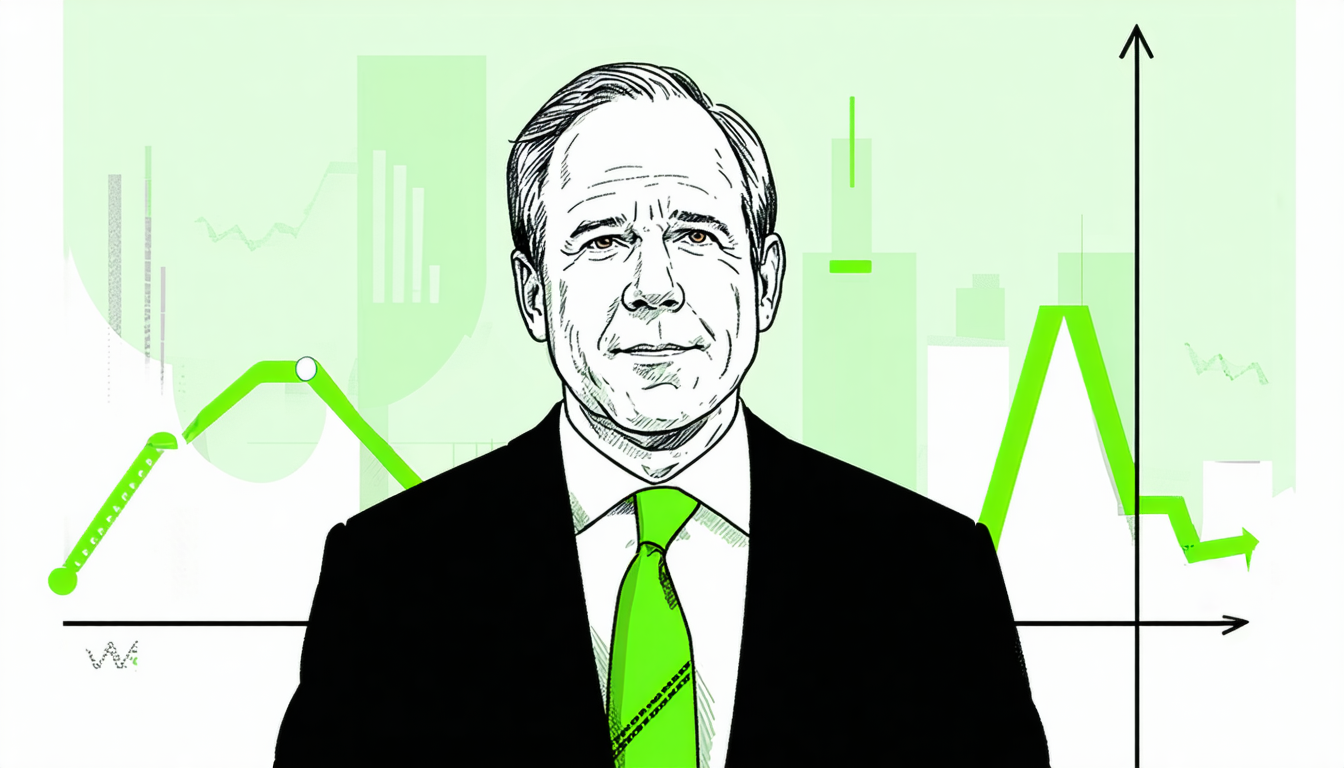
JPMorgan's Bob Michele Highlights Oversold Conditions Across the Yield Curve
🐦 The Peck
Key Facts
-
●
Bob Michele, Chief Investment Officer at JPMorgan Asset Management, stated that the entire yield curve is oversold.
CORROBORATED -
●
Michele suggests that oversold conditions could lead to a market correction in bond prices.
UNVERIFIED -
●
The yield curve has been inverted, indicating potential economic slowdown.
CORROBORATED
🔍 The Big Picture
**The Big Picture: Analysis of JPMorgan's Insights on Yield Curve Dynamics**
Bob Michele, the Chief Investment Officer at JPMorgan Asset Management, has recently highlighted that the entire yield curve is currently oversold, a statement that carries significant implications for both bond markets and broader economic indicators. An oversold condition suggests that bond prices have fallen too far relative to their fundamental values, potentially setting the stage for a market correction. This analysis comes at a time when the yield curve has inverted, a phenomenon often viewed as a precursor to economic slowdowns. Historically, an inverted yield curve has been a reliable indicator of recession, as it reflects investor sentiment favoring long-term bonds over short-term securities due to anticipated economic challenges.
The implications of this oversold condition are multifaceted. For investors, it may signal a potential buying opportunity in the bond market if prices are expected to rebound. However, it also raises concerns about the underlying economic health, as an inverted yield curve typically suggests that investors are wary of future growth prospects. If Michele's assessment holds true, we could see a short-term rebound in bond prices as markets correct themselves, which would provide some relief to fixed-income investors who have faced declining yields. Conversely, if the oversold conditions do not lead to a correction, it may indicate deeper issues within the economy, potentially prompting further declines in investment sentiment.
In a broader context, the current landscape of the yield curve reflects ongoing trends in monetary policy and inflation management. With central banks, including the U.S. Federal Reserve, navigating the complexities of inflation control while fostering economic growth, the dynamics of the yield curve serve as a critical feedback mechanism. An inverted yield curve, coupled with oversold conditions, may compel policymakers to reassess their strategies, particularly if it signals a looming recession. Investors and analysts alike will be closely monitoring these developments, as they could influence interest rate decisions and future bond issuance strategies.
While Michele's observations present a compelling case for potential market corrections, it is essential to approach these insights with caution. The financial markets are influenced by a myriad of factors, including geopolitical events, changes in consumer behavior, and unexpected economic data releases. Additionally, competing interpretations of the yield curve's implications exist; some analysts argue that current conditions may reflect a temporary mispricing rather than a signal of systemic weakness. As such, while oversold conditions could prompt a market correction, the timing and extent of any such movement remain uncertain and speculative. Investors are encouraged to stay informed and agile in their strategies as these dynamics evolve.
👀 What to Watch
- **Federal Reserve Meeting**: The next Federal Open Market Committee (FOMC) meeting is scheduled for **November 1, 2023**. Market participants will be closely watching for any signals regarding interest rate changes that could impact the yield curve.
- **Economic Data Releases**: The U.S. Bureau of Labor Statistics will release the **October Employment Situation Report** on **November 3, 2023**. This report will provide insights into job growth and unemployment rates, which could influence bond market dynamics.
- **Consumer Price Index (CPI) Report**: The **October CPI report** will be released on **November 10, 2023**. Inflation data is critical for the bond market and could affect perceptions of oversold conditions.
- **JPMorgan Earnings Call**: JPMorgan Chase & Co. is set to hold its **Q3 2023 earnings call on October 13, 2023**. Analysts will seek insights from Bob Michele and other executives regarding the bank's outlook on bond markets and interest rates.
- **Treasury Auctions**: Upcoming U.S. Treasury bond auctions are scheduled for **October 24-26, 2023**. These auctions will provide a gauge of investor demand for government debt amid current yield curve conditions.
- **Market Analysis Reports**: Various financial institutions, including JPMorgan, are expected to release their **Q4 market outlook reports** in mid-November 2023. These reports may provide further analysis on the yield curve and potential market corrections.
- **Economic Forecasts from the IMF**: The International Monetary Fund (IMF) will release its **World Economic Outlook** on **October 10, 2023**. This report could offer insights on global economic conditions that may influence U.S. bond markets.
Comments (0)
No comments yet. Be the first to share your thoughts!
This Peckture was researched and generated by Peckture.com based on publicly available information. All claims are marked with their verification status.
Last updated: September 28, 2026 11:00 AM