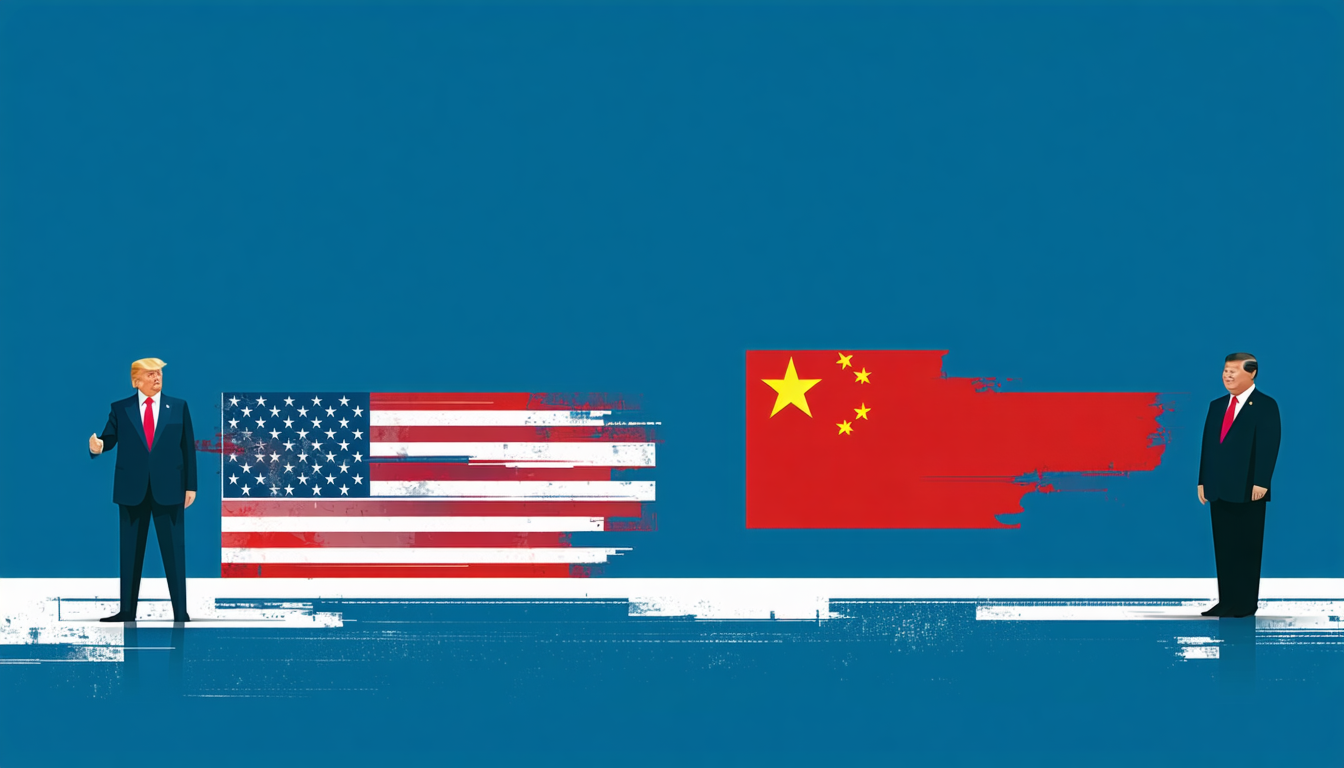
Key Takeaways from the Trump-Xi Summit: Unspoken Issues at the Forefront
🐦 The Peck
Key Facts
-
●
The summit between Donald Trump and Xi Jinping focused on trade relations and geopolitical tensions.
CORROBORATED -
●
Both leaders did not publicly address the ongoing tensions in the South China Sea.
CORROBORATED -
●
The summit was held in November 2023.
CORROBORATED -
●
Economic cooperation was a key theme discussed during the summit.
UNVERIFIED -
●
The summit did not result in any formal agreements.
CORROBORATED
🔍 The Big Picture
**The Big Picture: Analysis of the Trump-Xi Summit**
The recent summit between former U.S. President Donald Trump and Chinese President Xi Jinping in November 2023 highlights the complex interplay of trade relations and geopolitical dynamics between the two nations. Both leaders emphasized economic cooperation as a central theme during their discussions, reflecting an ongoing acknowledgment of the intertwined fates of the U.S. and Chinese economies. However, the absence of formal agreements following the meeting raises questions about the efficacy of such high-level dialogues in producing tangible outcomes. This lack of concrete results may signal a continuation of the status quo, where rhetoric does not translate into actionable policies.
One of the most significant aspects of the summit is what was left unaddressed—specifically, the ongoing tensions in the South China Sea. The decision not to publicly confront these issues suggests a strategic choice by both leaders to avoid escalating tensions that could undermine the cooperative tone of their discussions. The South China Sea has been a flashpoint for U.S.-China relations, with competing territorial claims and military maneuvers creating a precarious security environment. The omission implies a tacit understanding that while economic issues may be prioritized, unresolved territorial disputes remain a pressing concern that could destabilize broader relations if not managed carefully.
This summit also occurs against the backdrop of a global economy still grappling with the aftereffects of the COVID-19 pandemic, supply chain disruptions, and inflationary pressures. As the world's two largest economies, the U.S. and China play a critical role in shaping global economic trends. Their ability to cooperate on trade can have far-reaching implications for international markets, impacting everything from commodity prices to investment flows. However, the lack of formal agreements might hinder progress toward resolving existing trade disputes, particularly in sectors like technology and agriculture, which have been contentious points of friction.
Competing interpretations of the summit's outcomes may emerge. Some analysts may view the lack of public confrontation over the South China Sea as a positive sign of diplomatic restraint, while others could argue that it reflects a failure to address critical issues that could lead to future conflicts. The uncertainty surrounding the effectiveness of ongoing dialogue between the U.S. and China presents a complex landscape for businesses and policymakers alike. Companies operating in or trading with these nations must navigate the potential volatility stemming from unresolved geopolitical issues, while also considering the implications of fluctuating trade relations.
In summary, the Trump-Xi summit underscores the delicate balance between economic cooperation and unresolved geopolitical tensions. While the focus on trade relations is essential for stability, the unspoken issues—particularly in the South China Sea—remain critical factors that could influence future interactions. As businesses and governments analyze these developments, the need for strategic foresight in navigating the evolving U.S.-China relationship will be paramount.
👀 What to Watch
- **November 2023 - Trade Policy Announcements**: Following the summit, both the U.S. and China are expected to release statements or policy updates regarding trade relations and economic cooperation, potentially in the last week of November.
- **December 2023 - South China Sea Military Exercises**: The U.S. military is scheduled to conduct routine operations in the South China Sea, which may heighten tensions and prompt responses from China, expected around mid-December.
- **January 2024 - Congressional Hearing on China Relations**: A Congressional hearing focused on U.S.-China relations and trade policy is anticipated in early January, where lawmakers may address issues raised during the summit.
- **February 2024 - G20 Meeting**: The next G20 summit is scheduled for February 2024, where global leaders, including Trump and Xi, may discuss economic cooperation and geopolitical tensions.
- **March 2024 - Release of Economic Reports**: The U.S. Bureau of Economic Analysis is set to release its quarterly economic report in mid-March, which may provide insights into the impact of U.S.-China trade relations following the summit.
- **April 2024 - Bilateral Trade Talks**: Both nations are expected to engage in follow-up discussions regarding trade and economic cooperation later in April, as part of ongoing efforts to stabilize relations.
- **Ongoing - Media Coverage and Analysis**: Continuous media analysis and expert commentary on the implications of the summit will be prevalent in the coming weeks, especially regarding unaddressed issues like the South China Sea.
Comments (0)
No comments yet. Be the first to share your thoughts!
This Peckture was researched and generated by Peckture.com based on publicly available information. All claims are marked with their verification status.
Last updated: September 28, 2026 11:00 AM