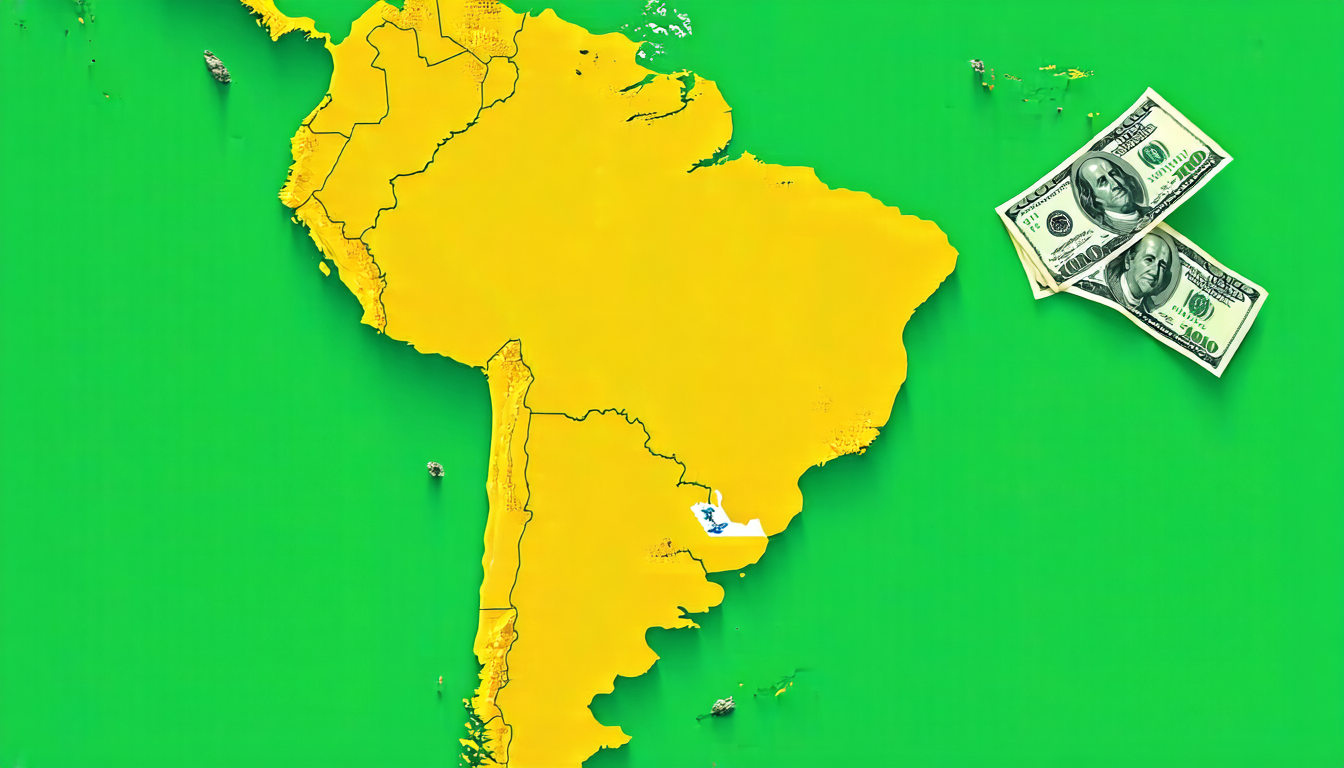
Latin American Currencies Surge as Brazilian Real Leads Emerging Market Gains
🐦 The Peck
Key Facts
-
●
The Brazilian Real has outperformed other emerging market currencies recently.
CORROBORATED -
●
Latin American currencies have shown significant gains against the US dollar.
CORROBORATED -
●
Factors contributing to the strength of Latin American currencies include rising commodity prices and improving economic conditions.
UNVERIFIED -
●
The Chilean Peso and Mexican Peso have also seen notable appreciation against the dollar.
CORROBORATED
🔍 The Big Picture
**The Big Picture: Latin American Currencies Surge as Brazilian Real Leads Emerging Market Gains**
The recent surge in Latin American currencies, particularly the Brazilian Real, reflects a significant shift in the economic landscape of the region. The Real has outperformed other emerging market currencies, with the Chilean Peso and Mexican Peso also experiencing notable appreciation against the US dollar. This upward trend is primarily attributed to rising commodity prices and improving economic conditions across Latin America, which have bolstered investor confidence and attracted capital inflows. As a result, the strengthening of these currencies can be seen as a positive signal for the economic recovery and growth prospects of the region.
The implications of this currency appreciation are multifaceted. For investors, the strengthened currencies may present new opportunities for investment in Latin American markets, particularly in sectors directly tied to commodities, such as agriculture and mining. Additionally, a stronger currency can help mitigate inflationary pressures by reducing the cost of imported goods, which is particularly relevant in an era of global supply chain disruptions. However, this scenario also poses challenges for exporters, as a stronger currency can make their goods less competitive in international markets. As such, businesses may need to recalibrate their strategies to navigate this dual-edged sword.
Broader trends suggest that the recent performance of Latin American currencies is indicative of a growing resilience in the region's economies, particularly as they rebound from the impacts of the COVID-19 pandemic. The increase in commodity prices, driven by global demand, has been a crucial factor in this recovery, as many Latin American countries are significant exporters of raw materials. Moreover, stable macroeconomic policies and improving fiscal health in several nations have also contributed to the strengthening of their currencies. However, uncertainty remains regarding the sustainability of these gains, especially in light of potential geopolitical tensions and fluctuations in global commodity prices.
Competing interpretations of this currency surge exist, particularly concerning its long-term sustainability. While some analysts view the strengthening of Latin American currencies as a sign of economic recovery and resilience, others caution that external factors, such as changes in U.S. monetary policy or a slowdown in global economic growth, could undermine these gains. Furthermore, the potential for currency volatility remains a concern, as fluctuations in commodity prices or shifts in investor sentiment could lead to rapid reversals. Stakeholders must remain vigilant, monitoring both regional developments and global economic indicators to fully understand the implications of this currency surge.
In conclusion, the recent appreciation of Latin American currencies, led by the Brazilian Real, represents a critical juncture for the region's economic landscape. While the current trends indicate a positive trajectory, the interplay of global economic factors and local conditions will ultimately determine the sustainability of this momentum. As businesses and investors navigate this evolving environment, understanding the broader implications of currency fluctuations will be essential for strategic decision-making.
👀 What to Watch
- **Brazilian Central Bank Meeting**: Scheduled for December 5, 2023, the Central Bank of Brazil will hold a monetary policy meeting where interest rates and inflation targets will be discussed, potentially impacting the Brazilian Real's strength.
- **Commodity Price Reports**: The International Monetary Fund (IMF) will release its World Economic Outlook on October 10, 2023, which will provide insights into global commodity prices that may affect Latin American currencies.
- **Chilean Economic Data Release**: On November 30, 2023, Chile will publish its GDP growth figures for Q3 2023, which could influence the Chilean Peso's performance against the dollar.
- **Mexican Inflation Report**: The National Institute of Statistics and Geography (INEGI) will release the inflation data for Mexico on November 8, 2023, which may affect the Mexican Peso's valuation.
- **U.S. Federal Reserve Meeting**: The Federal Open Market Committee (FOMC) will meet on November 1, 2023, to discuss U.S. monetary policy, which could impact the strength of the US dollar and, consequently, Latin American currencies.
- **Commodity Futures Trading Commission (CFTC) Report**: The CFTC will release its weekly Commitment of Traders report on October 31, 2023, providing insights into market positions in commodities that are vital for Latin American economies.
- **Earnings Reports from Key Latin American Companies**: Major companies in the commodities sector, such as Vale S.A. and Grupo Bimbo, will release their quarterly earnings reports in early November 2023, which may provide insights into economic conditions affecting currency strength.
Comments (0)
No comments yet. Be the first to share your thoughts!
This Peckture was researched and generated by Peckture.com based on publicly available information. All claims are marked with their verification status.
Last updated: October 5, 2026 5:00 PM