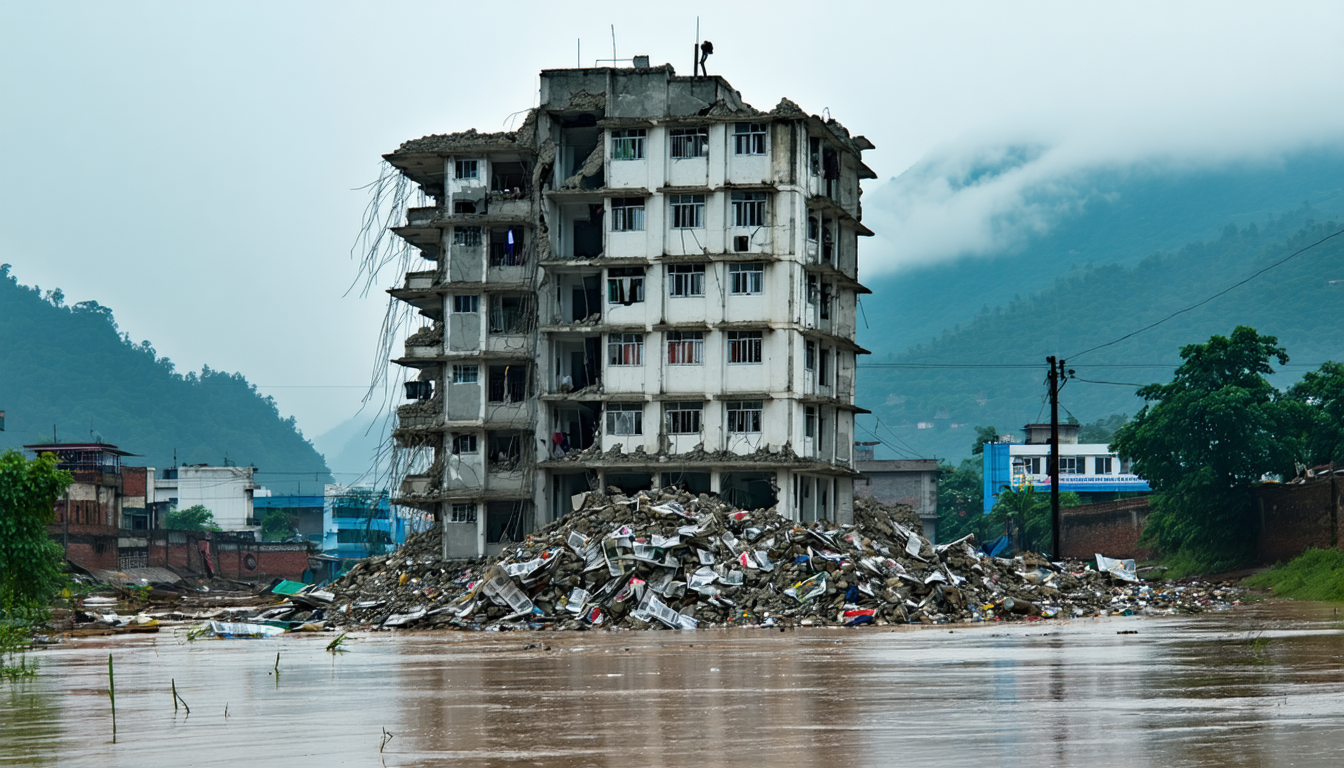
Nepal Government Building Collapses into River Amid Severe Flooding
🐦 The Peck
Key Facts
-
●
A government building in Nepal collapsed into a river due to severe flooding.
CORROBORATED -
●
The flooding in Nepal has been exacerbated by heavy monsoon rains.
CORROBORATED -
●
The incident occurred in the Sindhupalchowk district of Nepal.
UNVERIFIED -
●
There have been multiple reports of casualties and damage due to the floods across Nepal.
CORROBORATED
🔍 The Big Picture
**The Big Picture: Analysis of Nepal Government Building Collapse Amid Severe Flooding**
The recent collapse of a government building in the Sindhupalchowk district into a river highlights the severe impact of monsoon flooding in Nepal, a situation worsened by climate change and inadequate infrastructure. The heavy monsoon rains, which are typical for this time of year, have led to widespread flooding across the country, resulting in multiple casualties and extensive damage to property. This incident serves as a stark reminder of the vulnerabilities faced by many communities in Nepal, particularly in rural areas where infrastructure may not be adequately equipped to withstand extreme weather events.
The implications of this disaster extend beyond immediate human and material losses. The collapse of a government building signifies not only the physical destruction of public infrastructure but also raises concerns about governance and disaster preparedness. In a nation that has historically struggled with natural disasters, the resilience of its infrastructure is crucial for effective governance and public trust. The situation may prompt a reevaluation of current policies related to urban planning and disaster management, potentially leading to increased investment in more resilient infrastructure and community preparedness initiatives.
Broader trends in climate change are also relevant to this incident. Nepal, like many countries in South Asia, is experiencing the adverse effects of climate variability, which includes intensified rainfall and the frequency of extreme weather events. This trend poses significant challenges for economic stability and development, particularly in sectors such as agriculture, which is vital for the country's economy. The growing prevalence of such disasters could lead to increased insurance claims, greater financial strain on local governments, and a potential shift in investment priorities as resources are diverted to disaster recovery rather than development projects.
While the immediate focus is on recovery and support for affected communities, this incident raises questions about long-term strategies for climate adaptation and resilience. Competing interpretations may arise regarding the adequacy of government response to such disasters; some may argue for a more proactive approach in infrastructure development, while others may advocate for community-led initiatives that emphasize local knowledge and resilience-building. Uncertainty remains regarding the full extent of damages and the necessary policy responses, but there is a clear need for a holistic approach that integrates disaster risk reduction into national planning frameworks.
In conclusion, the collapse of the government building in Nepal amid severe flooding underscores the urgent need for systemic change in how the country prepares for and responds to natural disasters. The intersection of climate change, infrastructure resilience, and governance will require concerted efforts from all stakeholders to mitigate future risks and enhance the safety and well-being of communities across Nepal.
👀 What to Watch
- **Local Government Response Meeting**: A meeting is scheduled for October 15, 2023, where local authorities in Sindhupalchowk will assess the damage caused by the flooding and discuss immediate relief efforts.
- **National Disaster Management Authority Briefing**: On October 17, 2023, the National Disaster Management Authority of Nepal will hold a press briefing to provide updates on the flooding situation and ongoing rescue operations across affected districts.
- **Monsoon Forecast Update**: The Department of Hydrology and Meteorology in Nepal is expected to release a weather forecast on October 20, 2023, detailing upcoming monsoon conditions and potential risks of further flooding.
- **Casualty and Damage Assessment Report**: A comprehensive report on casualties and damage across Nepal is anticipated to be published by the Ministry of Home Affairs by October 25, 2023, which will include data from the Sindhupalchowk district.
- **International Aid Coordination Meeting**: An international aid coordination meeting is scheduled for October 30, 2023, where various NGOs and government representatives will discuss humanitarian assistance for flood victims.
- **Infrastructure Review Committee Formation**: By November 5, 2023, the Nepalese government plans to form a committee to review the structural integrity of government buildings in flood-prone areas following the incident in Sindhupalchowk.
Comments (0)
No comments yet. Be the first to share your thoughts!
This Peckture was researched and generated by Peckture.com based on publicly available information. All claims are marked with their verification status.
Last updated: September 30, 2026 11:02 AM