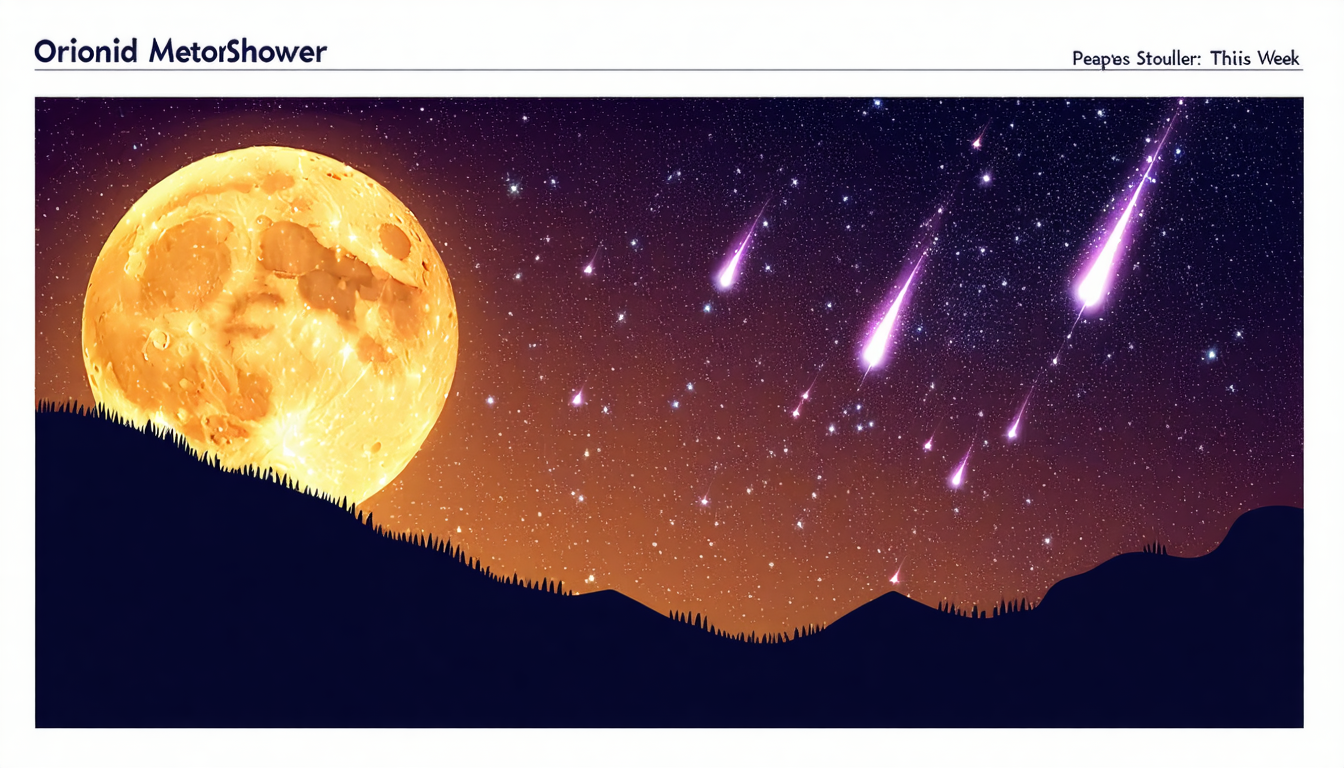
Orionid Meteor Shower Peaks This Week: What to Expect
🐦 The Peck
Key Facts
-
●
The Orionid meteor shower will peak on the night of October 21-22, 2023.
CORROBORATED -
●
The Orionid meteor shower is known for producing bright meteors that can be seen at a rate of 20 meteors per hour at its peak.
CORROBORATED -
●
The Orionids are produced by debris from Halley's Comet.
CORROBORATED -
●
Best viewing conditions for the Orionid meteor shower will be in dark areas away from city lights.
UNVERIFIED
🔍 The Big Picture
The Orionid meteor shower, peaking on the night of October 21-22, 2023, presents both a captivating astronomical event and an opportunity for communities to engage in stargazing. With the potential to observe up to 20 meteors per hour, this annual phenomenon is not just a spectacle but also a reminder of humanity's connection to celestial events, particularly as the meteors originate from the debris of Halley's Comet, which last passed close to Earth in 1986. This connection to a well-known comet underscores the ongoing fascination with celestial bodies and their influence on Earth.
The significance of the Orionids extends beyond mere visual enjoyment. As more people seek experiences that connect them with nature, events like the meteor shower can boost local economies. Communities may see increased tourism as stargazers travel to rural areas for optimal viewing conditions, away from the light pollution of urban centers. This trend towards ecotourism and outdoor activities aligns with broader societal shifts towards sustainability and appreciation of the natural world, which may influence local businesses to adapt their offerings to cater to such events.
However, there are competing interpretations regarding the implications of the Orionid meteor shower. While many view it as an opportunity for educational outreach and community engagement, others may argue that such natural events highlight the increasing light pollution and urbanization that diminish our ability to experience the night sky. This dual perspective raises questions about the balance between development and preserving natural phenomena, which could inform local policy decisions regarding urban planning and environmental conservation.
As the meteor shower approaches, it is important to note that viewing conditions can vary widely depending on geographic location and weather patterns. Uncertainty exists regarding cloud cover or atmospheric conditions that may obscure visibility. Consequently, while the Orionids promise a visually stunning display, the actual experience may differ for observers based on their circumstances. This variability can affect public interest and engagement, which in turn could influence how communities promote such events in the future.
In summary, the Orionid meteor shower serves as a significant cultural and economic touchpoint. It fosters community engagement, stimulates local economies, and raises awareness about environmental issues related to light pollution. As interest in celestial events continues to grow in an era of urbanization, understanding these dynamics will be crucial for businesses, policymakers, and communities alike to leverage such opportunities effectively.
👀 What to Watch
- **Peak Viewing Nights**: The Orionid meteor shower will peak on the night of October 21-22, 2023, making this the prime time for skywatchers to observe the meteors.
- **Meteor Count**: Expect to see approximately 20 meteors per hour at the peak, particularly in areas with minimal light pollution.
- **Halley's Comet Connection**: The Orionids are associated with Halley's Comet, which last passed through the inner solar system in 1986. This connection highlights the ongoing interest in studying the comet's debris.
- **Best Viewing Locations**: Astronomers recommend finding dark areas away from city lights for optimal viewing conditions during the peak nights.
- **Weather Conditions**: Monitor local weather forecasts leading up to October 21-22 to ensure clear skies for optimal meteor viewing.
- **Follow-Up Events**: After the peak, the Orionid meteor shower will continue to be visible, albeit at reduced rates, until late October, providing additional opportunities for observation.
Comments (0)
No comments yet. Be the first to share your thoughts!
This Peckture was researched and generated by Peckture.com based on publicly available information. All claims are marked with their verification status.
Last updated: September 30, 2026 11:01 AM