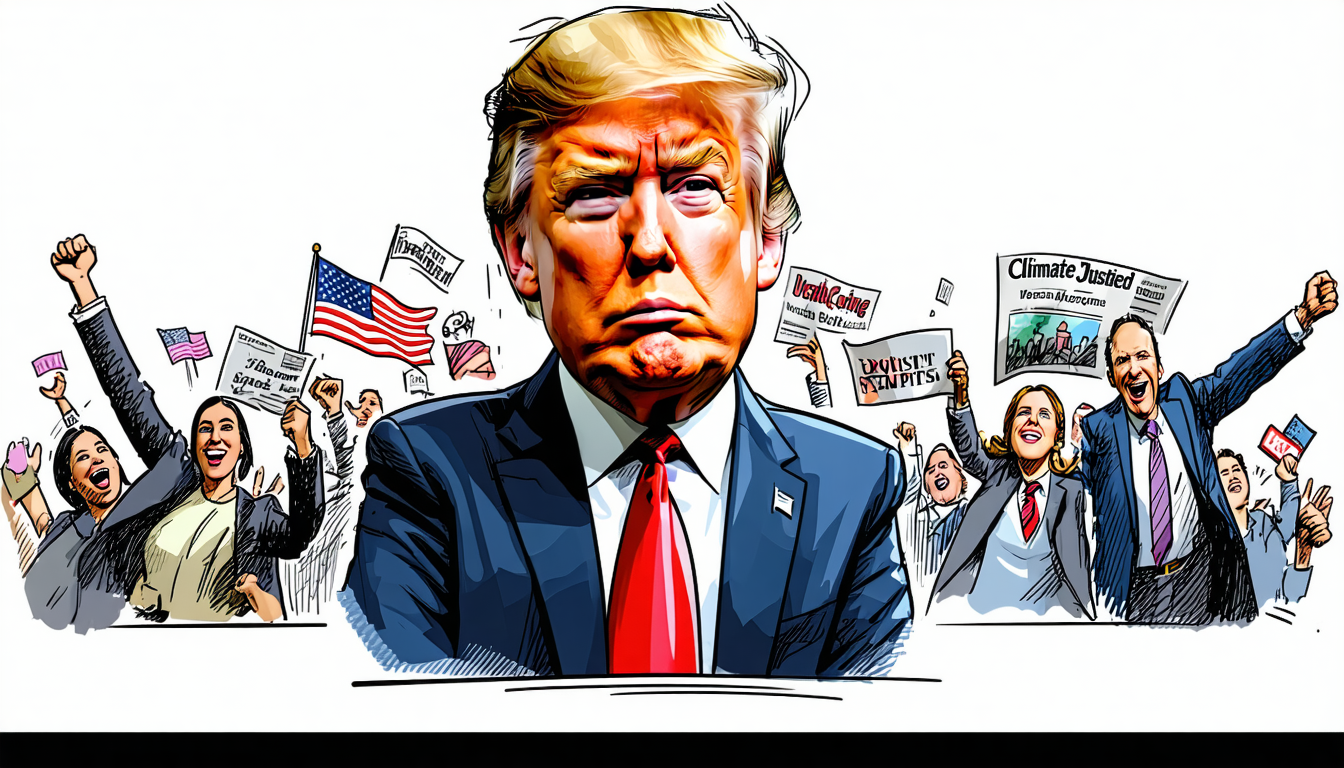
Political Cartoons Reflecting Current Events and Public Sentiment
🐦 The Peck
Key Facts
-
●
Political cartoons have increasingly addressed issues such as the economy, climate change, and social justice.
CORROBORATED -
●
Cartoonists often use satire to critique political figures and policies.
CORROBORATED -
●
Recent political cartoons have focused on the upcoming elections and voter sentiment.
UNVERIFIED -
●
The role of cartoonists in shaping public opinion has been highlighted in various media discussions.
UNVERIFIED
🔍 The Big Picture
**The Big Picture**
Political cartoons have long served as a barometer for public sentiment, reflecting societal concerns and political climates through satire and visual commentary. Recently, these cartoons have increasingly focused on pressing issues such as the economy, climate change, and social justice, aligning with broader societal discourse. The amplification of these themes in political cartoons is not merely artistic expression; it signifies a growing public consciousness regarding these issues, particularly as they relate to policy decisions and electoral outcomes. As the 2024 elections approach, the emphasis on voter sentiment in these cartoons underscores the pivotal role that public opinion plays in shaping political narratives.
The critical role of cartoonists in influencing public perception cannot be overstated. By utilizing humor and satire, they are able to distill complex political issues into accessible commentary, often challenging the status quo and critiquing political figures and their policies. This function is particularly significant in an era where misinformation can proliferate rapidly. Political cartoons, when grounded in factual representation, can serve as a counterbalance to misleading narratives, fostering a more informed electorate. Their ability to resonate with audiences emotionally also enhances engagement with political issues, potentially driving civic participation—a crucial element in a functioning democracy.
However, the reliance on political cartoons as a source of information carries its own set of implications. While they can provoke thought and discussion, the subjective nature of satire might lead to competing interpretations among different audience segments. For instance, while one group may appreciate a cartoon's critique of a political figure, another may perceive it as divisive or unfair. This divergence highlights the necessity for critical engagement with media, as well as the importance of diverse perspectives in public discourse. Furthermore, the commercial viability of political cartoons can be influenced by prevailing public sentiments, which may lead to self-censorship or shifts in content to align with audience expectations.
Looking ahead, the intersection of political cartoons with evolving technologies and platforms presents both opportunities and challenges. As digital media continues to dominate, cartoonists are finding new avenues to reach audiences, yet they must navigate the complexities of social media algorithms and echo chambers that can amplify or distort their messages. The implications of this shift are significant for both the creators and consumers of political commentary. It raises questions about the sustainability of traditional cartooning as a profession and the evolving role of visual satire in shaping public discourse.
In summary, the current landscape of political cartoons not only reflects ongoing societal and political issues but also plays a critical role in influencing public sentiment and engagement, especially as elections loom. As the medium evolves in response to technological changes and audience dynamics, its impact on political discourse and public opinion will remain a vital area of observation and analysis.
👀 What to Watch
- **October 31, 2023**: Deadline for political cartoon submissions for the upcoming election-themed art exhibit at the National Gallery, showcasing works that address current political issues and public sentiment.
- **November 8, 2023**: Midterm elections in the United States; expect a surge in political cartoons reflecting voter sentiment and election outcomes as cartoonists respond in real-time to results.
- **November 15, 2023**: Release of a report by the American Association of Editorial Cartoonists, detailing the impact of political cartoons on public opinion during the election cycle.
- **December 1, 2023**: Annual meeting of the Association of American Editorial Cartoonists, where discussions will focus on the evolving role of satire in political commentary and its influence on public discourse.
- **January 15, 2024**: Launch of a new documentary exploring the history and impact of political cartoons in shaping societal views on issues like the economy and climate change, featuring interviews with prominent cartoonists.
Comments (0)
No comments yet. Be the first to share your thoughts!
This Peckture was researched and generated by Peckture.com based on publicly available information. All claims are marked with their verification status.
Last updated: October 2, 2026 5:02 PM