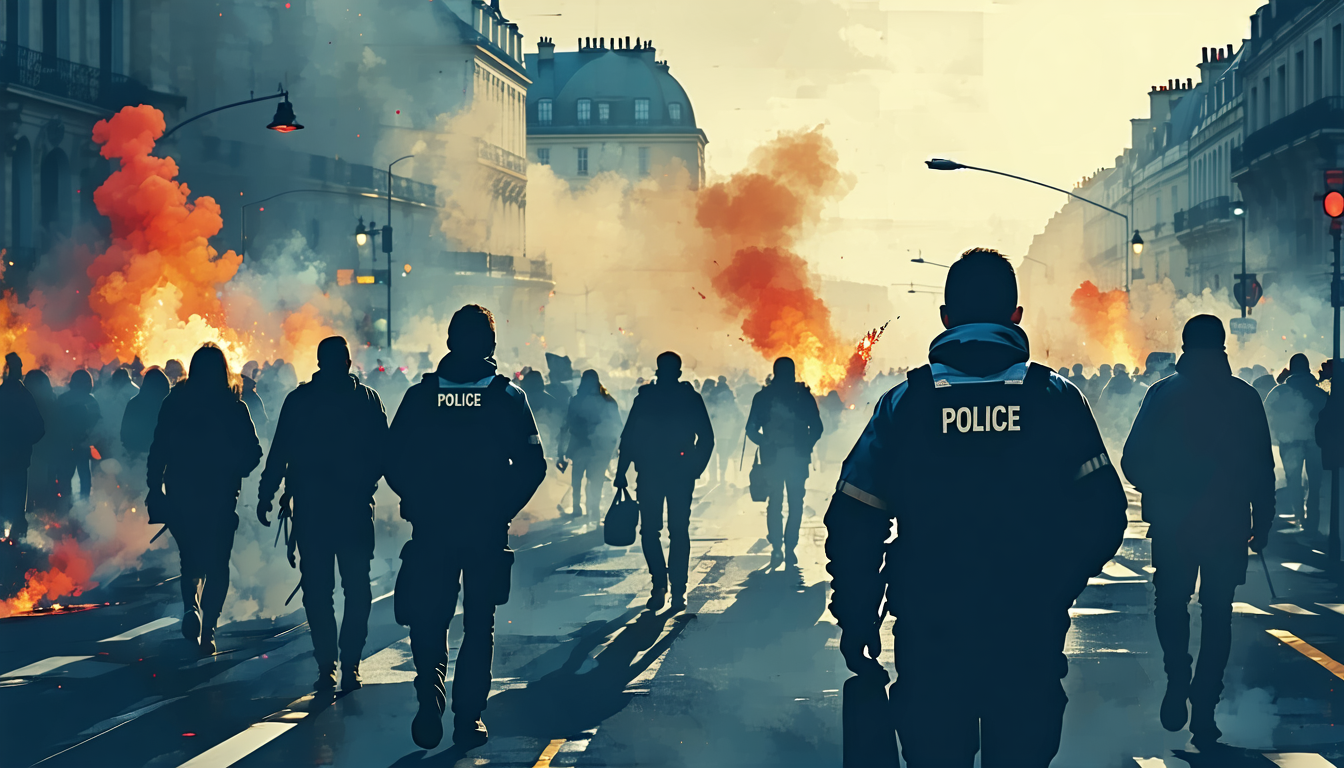
Protests Erupt in France Over School Policies, Leading to Tear Gas Use in Paris and Marseille
🐦 The Peck
Key Facts
-
●
Protests against school policies have escalated in France, leading to clashes with police.
CORROBORATED -
●
Tear gas was deployed by police in both Paris and Marseille during the protests.
CORROBORATED -
●
The protests are primarily driven by student and teacher opposition to recent educational reforms.
UNVERIFIED -
●
Protests have spread to multiple cities across France, indicating widespread discontent.
CORROBORATED
🔍 The Big Picture
The recent protests in France, characterized by significant unrest in cities such as Paris and Marseille, reflect a broader discontent with educational reforms that have sparked fierce opposition from both students and teachers. The deployment of tear gas by police indicates the intensity of these confrontations, suggesting that the situation has escalated beyond peaceful demonstrations. The protests, which have spread across multiple cities, highlight a growing trend of societal resistance to government policies perceived as detrimental to public services, in this case, the education sector.
This situation is particularly significant as it underscores the intersection of education policy and social stability in France. The educational reforms in question are part of a larger trend seen in various countries, where governments are attempting to modernize and streamline educational systems, often amid budget constraints. However, these efforts can lead to significant pushback from those directly affected, as they may be viewed as undermining the quality of education or reducing access to resources. In France, where education is a highly valued public service, any perceived threat to its integrity can mobilize large segments of the population, as evidenced by the current protests.
The implications of these protests extend beyond immediate public unrest; they may have lasting impacts on the government's approach to policy-making. If the discontent continues to grow, it could potentially lead to a reassessment of the proposed reforms, as the administration may be compelled to engage in dialogue with educators and students to address their concerns. Additionally, the unrest may influence public opinion and voter behavior in upcoming elections, as citizens often rally around issues that directly affect their lives, such as education.
While some may interpret the protests as a rejection of necessary reforms, others view them as a legitimate expression of concerns regarding the future of the educational system. The divergent perspectives on the necessity and impact of these reforms highlight the complexity of governance in a democratic society, where balancing progress and public sentiment is crucial. As the situation develops, the government’s response will be critical in determining whether the protests will lead to constructive dialogue or further escalation.
In summary, the protests in France signify a pivotal moment in the discourse surrounding educational reform and public policy. The government faces the challenge of navigating these tensions while also addressing the underlying issues that have mobilized such widespread dissent. The outcome of this unrest could shape not only the landscape of education in France but also the broader relationship between the state and its citizens regarding public services.
👀 What to Watch
- **Continued Protests**: Additional protests are scheduled in major cities, including Lyon and Toulouse, on **October 15, 2023**, as organizers call for a nationwide demonstration against educational reforms.
- **Government Response**: The French Ministry of Education is expected to hold a press conference on **October 16, 2023**, to address the ongoing protests and outline potential adjustments to the school policies.
- **Union Meetings**: Teachers' unions are convening on **October 17, 2023**, to discuss strategies for future actions and potential negotiations with the government regarding the reforms.
- **Parliamentary Debate**: A parliamentary session focused on educational reforms is set for **October 20, 2023**, where lawmakers will debate the implications of the policies and consider amendments.
- **Public Opinion Polls**: Results of recent public opinion polls regarding the educational reforms and protests are expected to be released on **October 18, 2023**, which may influence future government actions.
- **Legal Proceedings**: A court hearing concerning the legality of police actions during the protests, including the use of tear gas, is scheduled for **October 22, 2023**.
- **Follow-Up Protests**: Organizers have indicated plans for a larger protest on **October 25, 2023**, if no resolution is reached regarding the educational reforms.
Comments (0)
No comments yet. Be the first to share your thoughts!
This Peckture was researched and generated by Peckture.com based on publicly available information. All claims are marked with their verification status.
Last updated: October 6, 2026 10:01 PM