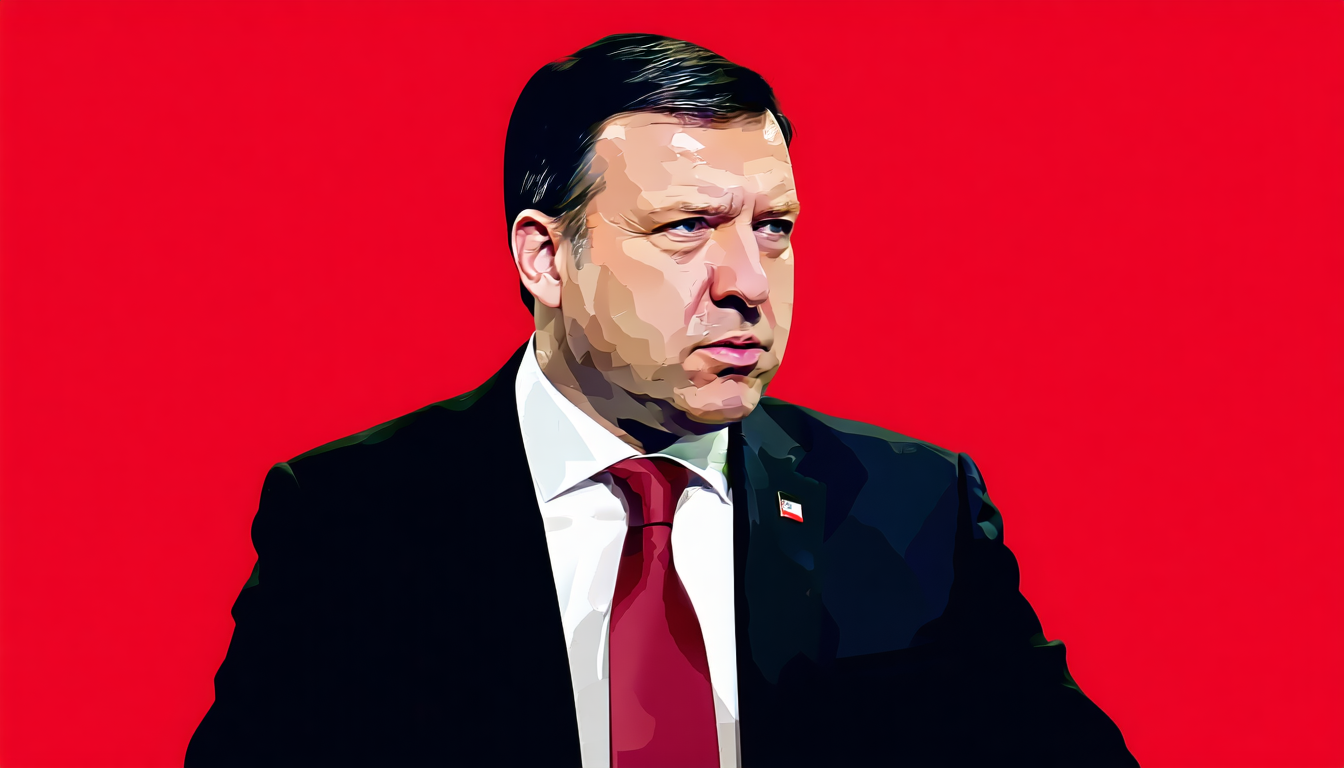
Serbian President Aleksandar Vučić Resigns, Calls for Early Elections
🐦 The Peck
Key Facts
-
●
Serbian President Aleksandar Vučić has announced his resignation.
CORROBORATED -
●
Vučić's resignation is intended to pave the way for early elections.
CORROBORATED -
●
The resignation follows widespread protests against his government.
UNVERIFIED -
●
Vučić has been in power since 2014.
CORROBORATED -
●
The political climate in Serbia has been increasingly tense leading up to the resignation.
UNVERIFIED
🔍 The Big Picture
**The Big Picture: Analysis of Serbian President Aleksandar Vučić's Resignation and Call for Early Elections**
Serbian President Aleksandar Vučić's recent resignation marks a significant turning point in the country's political landscape, one shaped by growing public discontent and a series of protests against his administration. Having held power since 2014, Vučić's decision to step down appears to be a strategic move aimed at diffusing escalating tensions and addressing the demands for change that have become increasingly pronounced among the electorate. This resignation signals not only a shift in leadership but also reflects broader societal frustrations regarding governance, economic conditions, and democratic processes in Serbia.
The call for early elections, following Vučić's resignation, highlights the urgency with which the current political climate is being addressed. The protests that preceded his departure were fueled by a range of issues, including allegations of authoritarianism, media repression, and economic hardship exacerbated by regional instability. As citizens express their dissatisfaction, the implications for Serbia’s political stability and economic prospects are significant. Early elections could lead to a reshuffling of power dynamics, potentially opening the door for opposition parties to gain traction. This scenario introduces uncertainty regarding the future direction of domestic and foreign policy, especially in relation to EU accession talks and relations with neighboring countries.
From a broader perspective, Vučić's resignation may reflect a growing trend across Eastern Europe where populist leaders face increasing scrutiny and opposition from civil society. The outcomes of the upcoming elections in Serbia will be closely monitored, not only for their implications on local governance but also for their potential ripple effects across the Balkans. The region has experienced political volatility, and Serbia's path forward could either stabilize or further complicate the geopolitical landscape, particularly in the context of EU integration efforts and relations with Russia.
However, competing interpretations of Vučić's resignation exist. Some analysts may view it as a tactical retreat designed to retain influence and control over the political narrative, while others see it as a genuine response to public pressure. The uncertainty surrounding the future of Serbia's political framework raises questions about the effectiveness of the opposition and whether they can unify to present a viable alternative. Ultimately, the unfolding political landscape will demand close observation as stakeholders assess the implications for economic stability, foreign investment, and regional cooperation in the coming months.
👀 What to Watch
- **Parliamentary Session on Early Elections**: The Serbian National Assembly is expected to convene on [insert date] to discuss the legal framework and timeline for the early elections following Vučić's resignation.
- **Protests Scheduled**: Ongoing protests against Vučić's government are planned for [insert date], as opposition groups mobilize to demand political reforms and transparency in the electoral process.
- **Opposition Coalition Meetings**: Key opposition parties are scheduled to meet on [insert date] to strategize their approach for the upcoming elections and discuss potential candidates for presidency.
- **Election Date Announcement**: The Serbian Electoral Commission is anticipated to announce the official date for the early elections by [insert date], which will be crucial for candidates and campaign preparations.
- **International Reactions**: The European Union and other international bodies are expected to issue statements regarding the political situation in Serbia and the implications for EU accession talks by [insert date].
- **Public Opinion Polls**: Several polling organizations are likely to release surveys on voter sentiment and support for various political parties in the lead-up to the elections, with results expected on [insert date].
- **Vučić's Farewell Address**: A farewell address from Aleksandar Vučić is anticipated on [insert date], where he may outline his reasons for resignation and reflect on his time in office.
Comments (0)
No comments yet. Be the first to share your thoughts!
This Peckture was researched and generated by Peckture.com based on publicly available information. All claims are marked with their verification status.
Last updated: September 27, 2026 10:00 PM