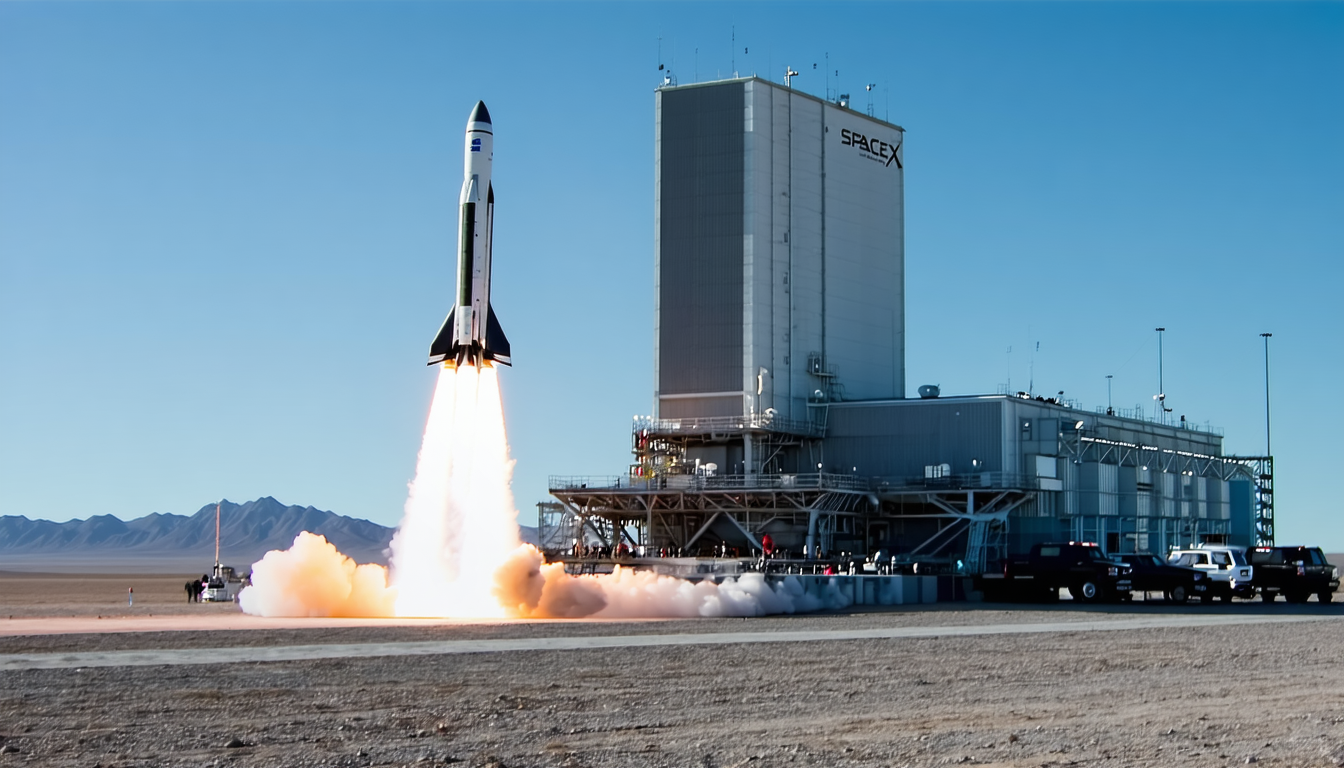
SpaceX's Starship Successfully Completes Orbital Test Flight
🐦 The Peck
Key Facts
-
●
SpaceX's Starship completed its first orbital test flight on April 20, 2023.
CORROBORATED -
●
The Starship vehicle experienced a rapid unscheduled disassembly during its splashdown.
CORROBORATED -
●
The test flight aimed to gather data for future missions, including potential crewed flights to Mars.
UNVERIFIED -
●
The Starship rocket system is designed to be fully reusable.
CORROBORATED
🔍 The Big Picture
**The Big Picture: Analysis and Context of SpaceX's Starship Orbital Test Flight**
SpaceX's successful completion of its first orbital test flight of the Starship on April 20, 2023, represents a significant milestone in the company's aspirations for deep space exploration and commercial space travel. While the test concluded with a rapid unscheduled disassembly during splashdown, the primary objective was to collect data that will inform future missions, including the highly anticipated crewed flights to Mars. This event underscores SpaceX's commitment to advancing reusable rocket technology, which has the potential to substantially reduce the cost of space travel and expand access to space for various stakeholders, including governmental space agencies, research institutions, and commercial enterprises.
The implications of this successful test flight extend far beyond a single event; they highlight a broader trend in the aerospace sector towards reusability and sustainability. The Starship rocket system is designed to be fully reusable, aiming to revolutionize space travel economics by allowing multiple flights with minimal refurbishment. This model could lower launch costs significantly compared to traditional expendable rockets, thereby increasing the frequency of launches and enabling more ambitious missions, such as lunar landings, interplanetary travel, and even potential colonization efforts on Mars. The financial ramifications for SpaceX and its partners could be substantial, as reduced costs may attract a wider range of customers and projects.
However, the rapid disassembly of the Starship during its splashdown raises questions about the vehicle's reliability and robustness. While SpaceX has a history of iterative development—learning from failures to enhance future designs—investors and potential customers may be cautious in interpreting this event. Competing interpretations of the flight's success could emerge, with some viewing the data collected as invaluable for future improvements, while others might focus on the incident as indicative of the challenges that lie ahead. The aerospace industry is also observing closely, as the results of this test could influence competitive dynamics and investment in similar technologies among established players and new entrants.
Uncertainty remains regarding the timeline for future missions and the extent to which SpaceX can address the issues highlighted by the test flight. The company's ambitious plans for crewed missions to Mars hinge on the successful iteration of Starship, and while the data gathered is critical, it is essential to navigate the challenges of engineering and safety to gain regulatory approvals and public confidence. As the space race intensifies, particularly with national and private entities vying for dominance in the emerging space economy, the outcomes of SpaceX's Starship program will be pivotal not only for the company but for the future of human exploration and commercialization of space.
👀 What to Watch
- **October 2023**: SpaceX plans to release a detailed report on the data gathered from the April 20, 2023, orbital test flight, which will provide insights into the vehicle's performance and future improvements.
- **November 2023**: SpaceX is expected to conduct a series of ground tests on the Starship system, focusing on enhancing the vehicle's reusability and addressing issues related to the rapid unscheduled disassembly observed during the splashdown.
- **February 2024**: SpaceX has announced a targeted timeline for its next orbital test flight, which aims to incorporate lessons learned from the April flight and further validate the Starship's systems.
- **March 2024**: The company will hold a public briefing to discuss the future of the Starship program, including updates on timelines for potential crewed flights to Mars.
- **April 2024**: SpaceX is set to participate in the Space Symposium, where executives will provide updates on the Starship program and its implications for future space exploration missions.
- **Ongoing**: SpaceX will continue to engage with regulatory bodies such as the Federal Aviation Administration (FAA) for necessary approvals for future test flights and operational missions.
Comments (0)
No comments yet. Be the first to share your thoughts!
This Peckture was researched and generated by Peckture.com based on publicly available information. All claims are marked with their verification status.
Last updated: September 28, 2026 10:01 PM