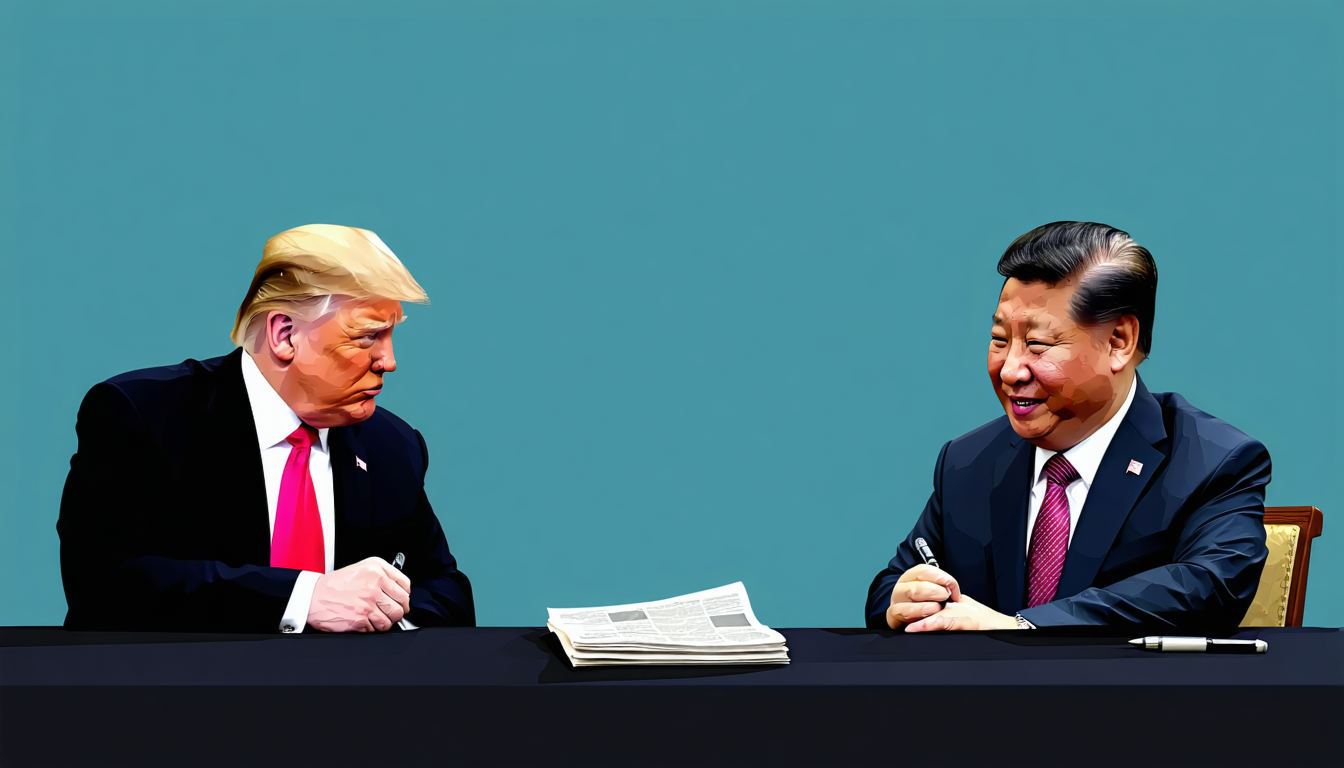
Trump and Xi Discuss Trade Relations, Pledge Coal Cooperation
🐦 The Peck
Key Facts
-
●
Trump and Xi Jinping held a summit to discuss trade relations.
CORROBORATED -
●
The summit resulted in a pledge for increased coal cooperation between the U.S. and China.
CORROBORATED -
●
Tariff discussions between the U.S. and China are ongoing.
CORROBORATED -
●
The U.S. and China are key players in the global coal market.
UNVERIFIED
🔍 The Big Picture
**The Big Picture: Analysis of Trump and Xi's Trade Summit and Coal Cooperation**
The recent summit between U.S. President Donald Trump and Chinese President Xi Jinping highlights the ongoing complexities of U.S.-China trade relations, particularly within the context of the global coal market. Both nations, as dominant players in this sector, have significant influence over global coal supply and pricing. The pledge for increased coal cooperation signals an effort to navigate the turbulent waters of bilateral trade, where tariffs and trade barriers remain contentious issues. This cooperation could potentially stabilize a sector that has faced fluctuations due to regulatory changes and shifting energy policies in both countries.
The commitment to enhance coal collaboration is noteworthy given the broader backdrop of climate change discussions and the global transition towards renewable energy sources. While coal has historically been a cornerstone of energy production in both nations, the increasing pressure to reduce carbon emissions complicates this relationship. This coal cooperation may serve short-term economic interests but could also draw scrutiny from environmental advocates and international bodies focused on climate commitments. The implications of this cooperation extend beyond bilateral relations and may influence global coal markets and energy policies across various nations.
Moreover, the ongoing tariff discussions indicate that underlying tensions remain unresolved. The U.S. and China have been engaged in a protracted trade conflict, characterized by reciprocal tariffs that have impacted a range of industries. The focus on coal cooperation could be interpreted as a strategic move by both leaders to find common ground amid broader trade disputes. However, it also raises questions about the sustainability of such cooperation if tariffs remain high and if other sectors continue to face barriers. The dynamic nature of these discussions means that while coal cooperation is a positive step, it may not lead to a comprehensive resolution of trade tensions.
Analysts may interpret this development in various ways. Some may view the coal pledge as a pragmatic approach to mitigate economic fallout from tariffs, while others could argue that it reflects a short-sighted prioritization of fossil fuels over sustainable energy practices. The uncertainty surrounding future U.S.-China relations, including the potential for escalated tariffs or regulatory changes, adds another layer of complexity. As both nations navigate these challenges, the outcomes of their discussions could have far-reaching implications for global energy markets and international trade policies.
In conclusion, the summit's focus on coal cooperation represents a significant, albeit complex, development in U.S.-China relations. While it may offer immediate benefits in terms of economic collaboration, the long-term implications must be carefully considered against the backdrop of environmental responsibilities and the evolving landscape of global energy demands. The interplay between trade negotiations and energy policy will remain a critical area to monitor as both countries seek to balance their economic interests with global commitments to sustainability.
👀 What to Watch
- **November 2023 Trade Talks**: Scheduled discussions between U.S. and Chinese trade representatives to further negotiate tariffs and trade policies. Specific dates to be confirmed.
- **U.S. Coal Industry Conference**: A major conference on coal industry developments will take place on December 5-7, 2023, in Washington, D.C., where the implications of U.S.-China coal cooperation may be addressed.
- **Quarterly Earnings Reports**: Major U.S. coal companies, including Peabody Energy and Arch Resources, are set to release their Q4 earnings reports in early February 2024, which may reflect impacts from the new coal cooperation.
- **China's 14th Five-Year Plan Review**: The Chinese government is expected to release updates on its 14th Five-Year Plan, including energy strategies, in early January 2024, which may influence coal cooperation commitments.
- **Global Coal Market Analysis Report**: An annual report on global coal market trends, including U.S.-China dynamics, is anticipated in late January 2024 from the International Energy Agency (IEA).
- **U.S.-China Bilateral Economic Dialogue**: The next scheduled meeting of the U.S.-China Bilateral Economic Dialogue is expected in March 2024, focusing on trade relations and cooperation frameworks.
- **UN Climate Change Conference (COP29)**: The next COP29 is set for November 2024, where discussions on fossil fuels, including coal, are likely to be a significant topic, potentially impacting U.S.-China coal agreements.
Comments (0)
No comments yet. Be the first to share your thoughts!
This Peckture was researched and generated by Peckture.com based on publicly available information. All claims are marked with their verification status.
Last updated: September 26, 2026 5:01 PM