Business
·
15 hours ago
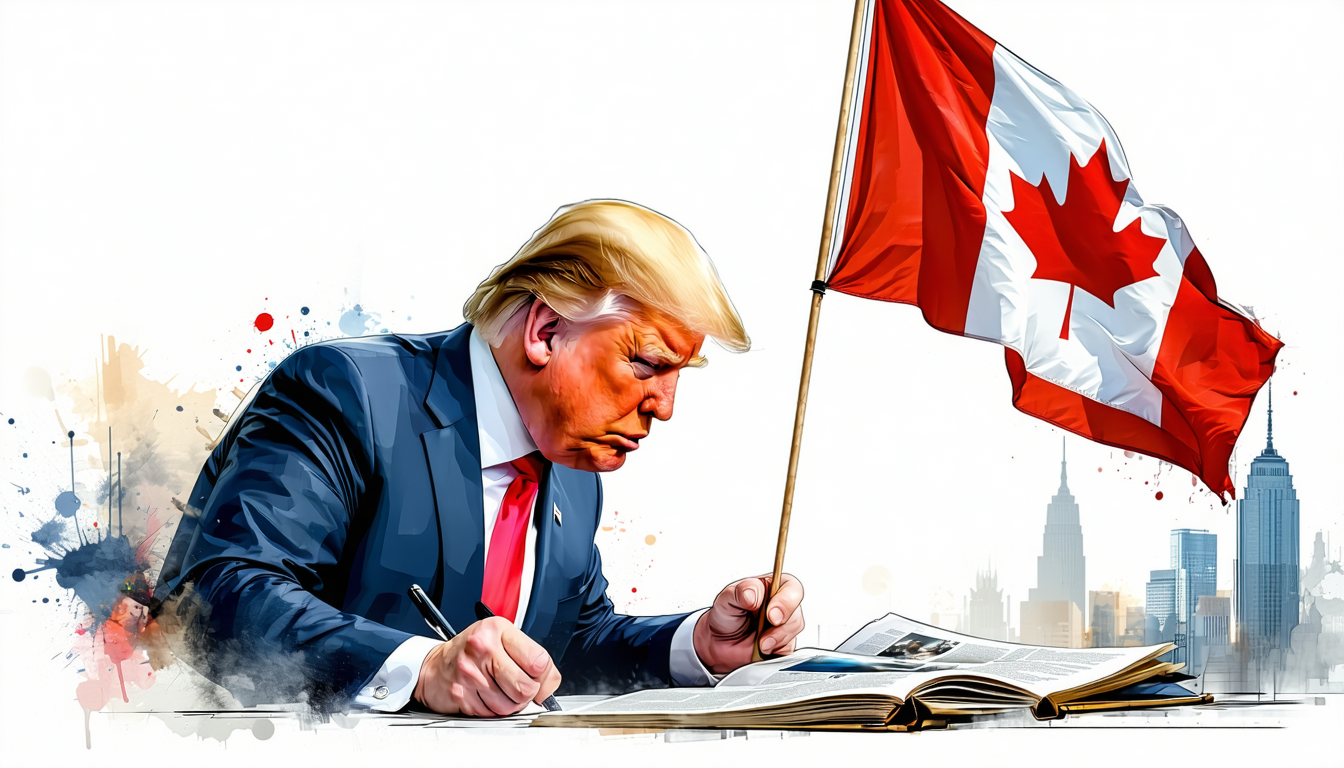
Trump Criticizes Canada's Potential EU Membership as 'Hostile Act'
🐦 The Peck
Former President Donald Trump criticized the potential for Canada to become an associate member of the European Union, labeling it a "hostile act." His remarks underscore the ongoing tensions between the United States and Canada, particularly in the realms of trade and diplomatic relations.
The European Union does have provisions for associate membership, which allows non-EU countries to engage in certain EU activities without full membership. Discussions about this concept have been ongoing among various nations, including Canada. Trump's comments reflect a broader concern regarding the implications of Canada’s potential closer ties with the EU on U.S.-Canada relations.
Key Facts
-
●
Trump stated that allowing Canada to become an associate member of the European Union could be considered a 'hostile act'.
CORROBORATED -
●
The European Union has provisions for associate membership, which allows non-EU countries to participate in certain EU activities.
CORROBORATED -
●
Trump's comments reflect ongoing tensions between the U.S. and Canada regarding trade and diplomatic relations.
UNVERIFIED -
●
The concept of associate membership in the EU has been a topic of discussion among various countries, including Canada.
UNVERIFIED
🔍 The Big Picture
**The Big Picture: Trump Criticizes Canada's Potential EU Membership as 'Hostile Act'**
Former President Donald Trump's recent remarks labeling Canada's potential associate membership in the European Union (EU) as a "hostile act" underscore the evolving dynamics of North American trade and diplomatic relations. Trump's assertion highlights a growing sensitivity to perceived shifts in alliances and economic partnerships that could challenge U.S. interests. The EU's structure allows for non-member states to engage in certain activities without full membership, which has sparked discussions about Canada's positioning as it seeks to strengthen its international ties.
This matter is significant as it reflects broader tensions between the U.S. and Canada, particularly in the context of trade agreements and tariffs. The renegotiation of NAFTA into the United States-Mexico-Canada Agreement (USMCA) was a pivotal moment that illustrated the complexities of U.S.-Canada relations, where trade policies can quickly become intertwined with national security narratives. Trump's comments may signal an anxiety regarding Canada's potential shift towards greater European integration, which some may interpret as a distancing from U.S. influence. The implications of this could extend beyond rhetoric, potentially influencing Canadian policy decisions and its approach to international trade.
The concept of associate membership in the EU has been a topic of interest for several countries, reflecting a broader trend of nations exploring alternative alliances as geopolitical landscapes shift. For Canada, engaging more closely with the EU could open new avenues for trade and cooperation, particularly in areas such as climate policy and technology, where the EU has been a leader. However, this could also create friction with the U.S., which has historically viewed itself as a primary partner and influencer in Canadian policy. The potential for a rift raises questions about how Canada will navigate its relationships with both the U.S. and the EU moving forward.
Competing interpretations of Trump's remarks may arise, with some viewing them as a defensive posture aimed at rallying domestic support by framing external relationships in a combative light. Others might see it as a reflection of legitimate concerns about economic competition and the strategic implications of Canada's alignment with the EU. It remains uncertain how Canada will respond to these developments, and whether it will pursue closer ties with the EU or seek to reassure the U.S. of its commitment to North American cooperation.
In conclusion, Trump's comments represent a microcosm of the larger geopolitical chess game at play, where alliances and economic partnerships are increasingly scrutinized. The potential implications for trade policies and diplomatic relations are material, as Canada weighs its options in a global landscape that is both interconnected and fraught with competition. As this narrative unfolds, stakeholders in both countries will need to carefully consider how these dynamics will shape their future economic and diplomatic strategies.
Former President Donald Trump's recent remarks labeling Canada's potential associate membership in the European Union (EU) as a "hostile act" underscore the evolving dynamics of North American trade and diplomatic relations. Trump's assertion highlights a growing sensitivity to perceived shifts in alliances and economic partnerships that could challenge U.S. interests. The EU's structure allows for non-member states to engage in certain activities without full membership, which has sparked discussions about Canada's positioning as it seeks to strengthen its international ties.
This matter is significant as it reflects broader tensions between the U.S. and Canada, particularly in the context of trade agreements and tariffs. The renegotiation of NAFTA into the United States-Mexico-Canada Agreement (USMCA) was a pivotal moment that illustrated the complexities of U.S.-Canada relations, where trade policies can quickly become intertwined with national security narratives. Trump's comments may signal an anxiety regarding Canada's potential shift towards greater European integration, which some may interpret as a distancing from U.S. influence. The implications of this could extend beyond rhetoric, potentially influencing Canadian policy decisions and its approach to international trade.
The concept of associate membership in the EU has been a topic of interest for several countries, reflecting a broader trend of nations exploring alternative alliances as geopolitical landscapes shift. For Canada, engaging more closely with the EU could open new avenues for trade and cooperation, particularly in areas such as climate policy and technology, where the EU has been a leader. However, this could also create friction with the U.S., which has historically viewed itself as a primary partner and influencer in Canadian policy. The potential for a rift raises questions about how Canada will navigate its relationships with both the U.S. and the EU moving forward.
Competing interpretations of Trump's remarks may arise, with some viewing them as a defensive posture aimed at rallying domestic support by framing external relationships in a combative light. Others might see it as a reflection of legitimate concerns about economic competition and the strategic implications of Canada's alignment with the EU. It remains uncertain how Canada will respond to these developments, and whether it will pursue closer ties with the EU or seek to reassure the U.S. of its commitment to North American cooperation.
In conclusion, Trump's comments represent a microcosm of the larger geopolitical chess game at play, where alliances and economic partnerships are increasingly scrutinized. The potential implications for trade policies and diplomatic relations are material, as Canada weighs its options in a global landscape that is both interconnected and fraught with competition. As this narrative unfolds, stakeholders in both countries will need to carefully consider how these dynamics will shape their future economic and diplomatic strategies.
👀 What to Watch
### What to Watch
- **October 31, 2023**: The European Union is set to hold a summit where discussions on associate membership for non-EU countries, including Canada, may be addressed. This could provide insights into the EU's stance and potential developments.
- **November 7, 2023**: The U.S. Trade Representative is scheduled to present a report to Congress on U.S.-Canada trade relations. This report may highlight any ongoing tensions and could influence future diplomatic discussions.
- **November 15, 2023**: Canada is expected to release its annual trade report, which may include details on its relationships with the EU and the U.S., potentially shedding light on the implications of Trump's comments.
- **December 1, 2023**: The Canadian government will host a roundtable discussion on its foreign policy, including relations with the EU and the U.S. This event may feature key officials and provide updates on Canada’s stance regarding potential EU membership.
- **December 5, 2023**: A scheduled meeting of the North American Free Trade Agreement (NAFTA) partners may provide a platform for discussions on trade relations and any impact of Canada’s EU considerations on U.S.-Canada relations.
- **January 2024**: The European Commission is anticipated to release a report evaluating the progress of associate membership discussions with various countries, including Canada, which may clarify the future of Canada’s EU aspirations.
- **October 31, 2023**: The European Union is set to hold a summit where discussions on associate membership for non-EU countries, including Canada, may be addressed. This could provide insights into the EU's stance and potential developments.
- **November 7, 2023**: The U.S. Trade Representative is scheduled to present a report to Congress on U.S.-Canada trade relations. This report may highlight any ongoing tensions and could influence future diplomatic discussions.
- **November 15, 2023**: Canada is expected to release its annual trade report, which may include details on its relationships with the EU and the U.S., potentially shedding light on the implications of Trump's comments.
- **December 1, 2023**: The Canadian government will host a roundtable discussion on its foreign policy, including relations with the EU and the U.S. This event may feature key officials and provide updates on Canada’s stance regarding potential EU membership.
- **December 5, 2023**: A scheduled meeting of the North American Free Trade Agreement (NAFTA) partners may provide a platform for discussions on trade relations and any impact of Canada’s EU considerations on U.S.-Canada relations.
- **January 2024**: The European Commission is anticipated to release a report evaluating the progress of associate membership discussions with various countries, including Canada, which may clarify the future of Canada’s EU aspirations.
This Peckture was researched and generated by AI based on publicly available information. All claims are marked with their verification status.
Last updated: September 17, 2026 3:10 AM