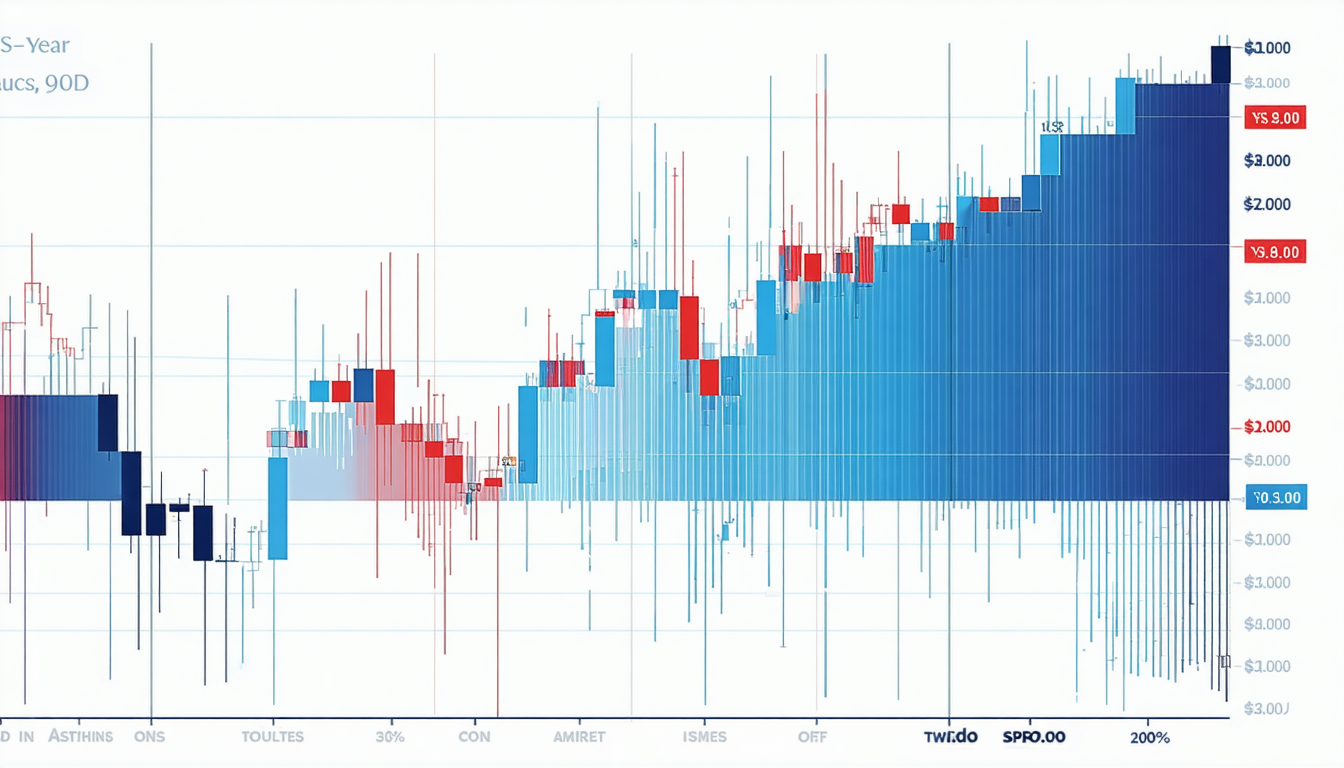
US Stocks Decline as 30-Year Treasury Yield Reaches Highest Level Since 2004
🐦 The Peck
Key Facts
-
●
The 30-year Treasury yield has reached its highest level since 2004.
CORROBORATED -
●
US stocks fell in response to rising bond yields.
CORROBORATED -
●
The S&P 500 index has experienced a decline of approximately 1.5% in recent trading.
UNVERIFIED -
●
Investors are concerned about the impact of high interest rates on economic growth.
CORROBORATED
🔍 The Big Picture
**The Big Picture: Analysis of US Stock Decline Amid Rising Treasury Yields**
The recent rise in the 30-year Treasury yield to its highest level since 2004 has sent ripples through the US stock market, resulting in a decline of approximately 1.5% in the S&P 500 index. This movement is significant, as it underscores the interplay between bond yields and stock valuations, particularly in an environment characterized by heightened interest rates. The increase in yields typically signals a stronger economy, yet it simultaneously raises concerns about the cost of borrowing and potential slowdowns in growth as businesses and consumers face higher financing costs.
Investors are reacting to the implications of sustained high interest rates, which can dampen economic expansion. Elevated borrowing costs can lead to reduced capital expenditures by businesses, as well as constrained consumer spending, which is a key driver of economic growth. The fear is that as yields rise, the attractiveness of bonds relative to stocks increases, prompting a shift in investment strategies that can exacerbate stock market declines. This trend reflects a broader concern among market participants regarding the Federal Reserve's monetary policy trajectory, particularly if it continues to prioritize combating inflation over supporting growth.
The situation also highlights the ongoing debate about the sustainability of the current economic expansion. While some analysts argue that a resilient labor market and consumer spending can support growth despite high rates, others warn that the cumulative effects of increased borrowing costs could lead to a tipping point. Competing interpretations hinge on whether current economic fundamentals can withstand the pressures imposed by higher yields or if they will ultimately constrain growth and corporate profitability.
Uncertainty remains regarding how long these elevated yields will persist and their potential impact on various sectors. For instance, technology and growth stocks, which are often more sensitive to interest rate changes, may experience more volatility compared to value stocks. Furthermore, the Federal Reserve's next moves in response to inflationary pressures will be closely monitored, as any signals of a shift in policy could alter the investment landscape dramatically.
In summary, the rise in the 30-year Treasury yield and the subsequent decline in US stocks reflect a critical juncture in financial markets. Investors are navigating a complex environment where the balance between growth and rising interest rates is increasingly precarious. The implications of this dynamic are far-reaching, influencing investment strategies, corporate financing decisions, and ultimately, economic growth trajectories.
👀 What to Watch
- **Federal Reserve Meeting**: The next Federal Open Market Committee (FOMC) meeting is scheduled for November 1, 2023. Investors will be closely monitoring any signals regarding interest rate policy and economic outlook.
- **Employment Report Release**: The U.S. Bureau of Labor Statistics will release the monthly Employment Situation report on November 3, 2023. This report could influence perceptions of economic growth and interest rate decisions.
- **Earnings Season Continues**: Major companies, including Apple and Amazon, will report their quarterly earnings on November 2, 2023, and November 6, 2023, respectively. Their performance may impact market sentiment and stock valuations.
- **Treasury Auction**: The U.S. Department of the Treasury will hold a 30-year bond auction on November 7, 2023. Results from this auction could provide insights into investor demand for long-term debt amid rising yields.
- **Consumer Price Index (CPI) Data**: The CPI report for October will be released on November 10, 2023. This data will be critical for assessing inflation trends and their potential impact on interest rates.
- **Economic Growth Data**: The advance estimate of U.S. GDP for Q3 2023 will be published on October 26, 2023. This figure will be important for understanding the overall health of the economy in relation to rising interest rates.
- **Market Reactions to Geopolitical Events**: Ongoing geopolitical tensions, particularly related to conflicts in the Middle East and Europe, may impact investor sentiment and market volatility in the coming weeks.
Comments (0)
No comments yet. Be the first to share your thoughts!
This Peckture was researched and generated by Peckture.com based on publicly available information. All claims are marked with their verification status.
Last updated: September 24, 2026 11:00 AM