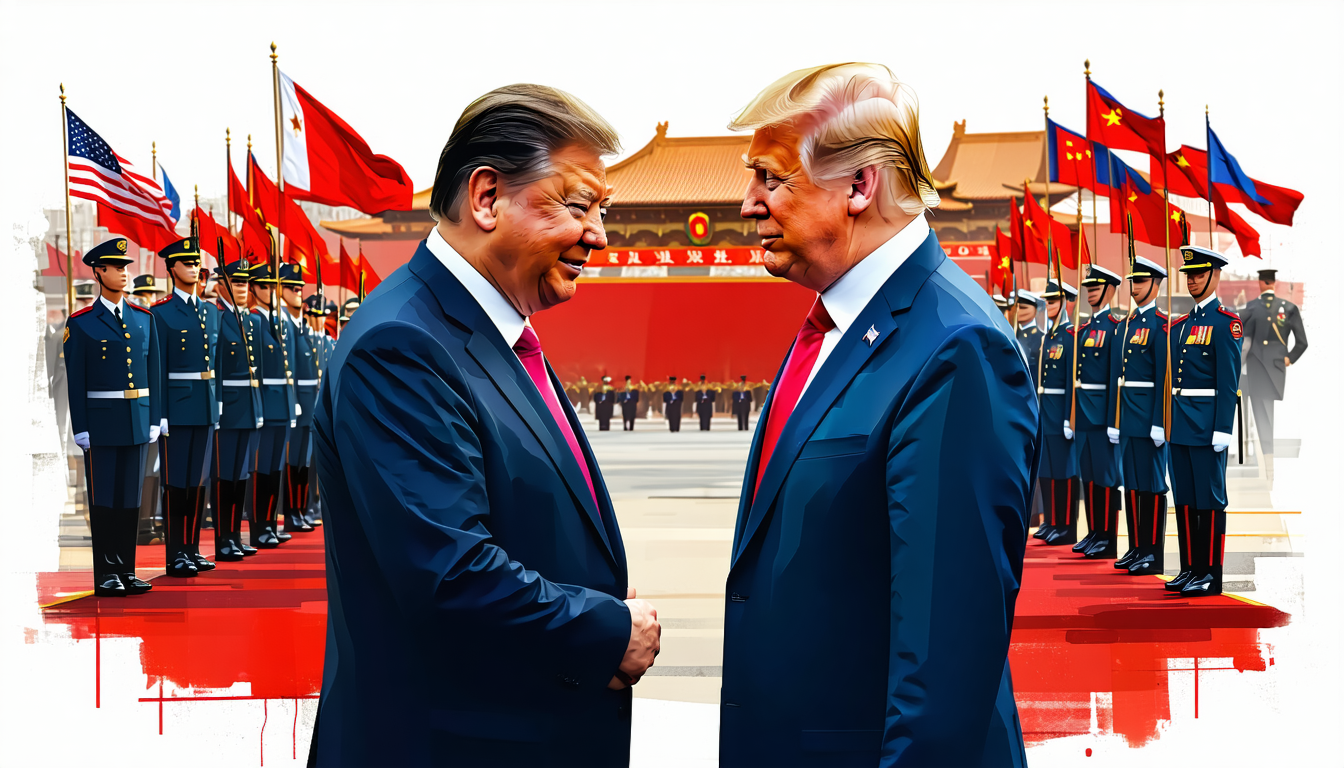
Xi Jinping's Visit to the U.S.: A Diplomatic Balancing Act
🐦 The Peck
Key Facts
-
●
Xi Jinping received a ceremonial welcome during his visit to the United States.
CORROBORATED -
●
The visit aimed to address ongoing trade tensions between the U.S. and China.
CORROBORATED -
●
Xi sought commitments from the U.S. regarding trade policies and tariffs.
UNVERIFIED -
●
The meeting included discussions on climate change cooperation.
UNVERIFIED -
●
There were significant disagreements over human rights issues during the discussions.
CORROBORATED
🔍 The Big Picture
**The Big Picture: Xi Jinping's Visit to the U.S.: A Diplomatic Balancing Act**
Xi Jinping's recent visit to the United States represents a pivotal moment in U.S.-China relations, marked by a ceremonial welcome that underscores the importance both nations place on diplomacy, despite their ongoing tensions. The primary focus of the visit was to address the significant trade issues that have strained economic ties since tariffs were implemented in 2018 as part of the U.S.-China trade war. As the world's two largest economies, the economic policies and trade agreements they forge not only affect their bilateral relationship but also have far-reaching implications for global markets and supply chains.
During the discussions, Xi Jinping sought concrete commitments from the U.S. regarding trade policies and tariffs, reflecting China's desire to stabilize its economic environment amid an uncertain global economic landscape. This is particularly important as both nations grapple with inflationary pressures and shifting supply chains in response to geopolitical tensions. The emphasis on climate change cooperation signals a potential area of partnership that could yield mutual benefits, especially as both countries face increasing scrutiny over their environmental policies. However, the discussions were overshadowed by significant disagreements over human rights issues, which remain a contentious point and could hinder progress on trade and climate cooperation.
The implications of this visit extend beyond immediate trade negotiations. It highlights a broader trend of strategic competition between the U.S. and China, where economic interdependence is increasingly juxtaposed with ideological differences. The balancing act that both leaders must navigate—between cooperation on shared challenges like climate change and firm stances on human rights—illustrates the complexities of modern diplomacy. Analysts may interpret these dynamics as a reflection of a world moving toward a multipolar order, where bilateral agreements will need to accommodate regional interests and global challenges.
While the meeting produced no immediate breakthroughs, the dialogue itself signifies a willingness from both sides to engage in discussions that could lead to future cooperation. However, uncertainty looms over whether these talks will translate into actionable commitments, as the domestic political landscapes in both countries could influence future negotiations. The outcomes of this visit will likely be scrutinized by businesses and policymakers alike, as they navigate the implications for trade, investment, and international relations in a rapidly evolving global context.
👀 What to Watch
- **U.S.-China Trade Talks**: A follow-up meeting is scheduled for November 15, 2023, where trade representatives from both countries will discuss the outcomes of Xi Jinping's visit and potential adjustments to tariffs.
- **Climate Change Summit**: The COP28 climate conference will take place from November 30 to December 12, 2023, in Dubai, where both the U.S. and China are expected to outline their commitments to climate cooperation discussed during Xi's visit.
- **Human Rights Report Release**: The U.S. State Department is set to release its annual human rights report on December 10, 2023, which may reflect the ongoing discussions and disagreements highlighted during Xi's visit.
- **Bilateral Economic Forum**: A U.S.-China Economic Forum is planned for January 25, 2024, aimed at addressing economic cooperation and trade policies following Xi's discussions in the U.S.
- **Congressional Hearings on U.S.-China Relations**: The Senate Foreign Relations Committee has scheduled hearings for February 7, 2024, to review the implications of Xi Jinping's visit and ongoing trade tensions.
- **G20 Leaders' Summit**: The next G20 summit will be held on February 24-25, 2024, in New Delhi, where Xi Jinping and U.S. leaders may engage in further discussions on trade and climate change.
- **U.N. Human Rights Council Session**: The next session of the U.N. Human Rights Council will commence on March 4, 2024, where discussions on human rights issues related to China are anticipated, potentially influenced by the outcomes of Xi's visit.
Comments (0)
No comments yet. Be the first to share your thoughts!
This Peckture was researched and generated by Peckture.com based on publicly available information. All claims are marked with their verification status.
Last updated: September 25, 2026 11:00 AM